Every single month, thousands of folks are typing into Google: “how much does crack cost?” or “how much for crack?” And honestly, it makes sense why so many are curious. Whether it’s politicians trying to understand drug policy, healthcare workers dealing with addiction, or just regular individuals trying to wrap their heads around this issue, these searches show how much concern there is about how easy it is to get drugs like crack cocaine and how cheap they’ve become.
At first glance, it seems like a straightforward question; everyone just wants to know the street price of crack and how it stacks up against cocaine prices. But when you dig deeper into those dollar amounts, there’s a whole complicated story underneath. We’re talking about health impacts, legal troubles, and serious social problems.
This blog series is going to break down those price points while also looking at what crack and cocaine really end up costing someone and I don’t just mean money.
Crack vs Cocaine: What’s the Difference?
Before we start throwing around price comparisons, let’s make sure we understand what separates powder cocaine from crack cocaine.
- Powder cocaine gets snorted or injected most of the time. It looks like fine white powder, and dealers usually mix it with other stuff to stretch it out.
- Crack cocaine is what happens when you take that powder cocaine and cook it up with baking soda or ammonia until you get these small “rocks.” Instead of snorting it, you smoke these rocks, which hits you really hard but doesn’t last very long.
When powder gets turned into crack, it’s not just changing how someone uses the drug, it’s completely changing what it’s worth on the street. Crack gets sold in way smaller amounts, which makes it easier for more individuals to afford and cheaper if you’re just buying a little bit. That’s exactly why so many searches pop up asking: “how much does crack cost compared to cocaine?“
If you want to see the bigger picture, organizations like the United Nations Office on Drugs and Crime (UNODC) have put out reports, including their 2004 Cocaine Report, that show how crack and powder cocaine get priced totally differently depending on what part of the world you’re in. This research helps explain why street prices here in the U.S. can be all over the place.
How Much Does Crack Cost?
So what’s the real answer to how much does crack cost these days? Well, the honest truth is that it all comes down to where you happen to be, how pure what you’re getting actually is, and who you’re dealing with.
All across the United States, the street price of crack has always been unpredictable:
- In some big cities, you might find a small rock going for as low as $10.
- But in other places, that exact same amount could run you $20–$50, and that all depends on how much demand there is, how heavy police presence is, and what the supply situation looks like.
The National Drug Intelligence Center (NDIC) documented this in their Connecticut Drug Threat Assessment, showing how even in just one state, crack prices can be completely different from one city to another. This perfectly explains why getting a straight answer to “how much for crack” is basically impossible those numbers are constantly changing based on location, risk levels, and how pure the product is.
How Much Is Crack a Gram?
Another search that comes up constantly is: “how much is crack a gram?” or “how much does a gram of crack cost?” Individuals figure that if they measure it in grams, like they do with powder cocaine, they’ll get some kind of consistent pricing. But with crack, using grams as a measurement really doesn’t tell you much.
Why not? Because crack rocks aren’t made to any standard size. When someone says they’re selling you a “gram,” there’s no guarantee it actually contains a full gram of pure cocaine base — a lot of it is probably just filler material. So when individuals search for “1 gram of crack,” they’re going to get completely different answers depending on who they ask and where they are.
Studies that have been published on PubMed looked at crack prices compared to powder cocaine prices and found that when you break it down per gram, crack seemed like the cheaper option. But that’s actually pretty misleading: since crack gets sold in these small, inconsistent pieces, what you end up paying each time you use can actually cost you way more in the long run.
How Much Is a Crack Rock?
Right after asking “how much does crack cost?” the next thing most individuals want to know is “how much is a crack rock?” or “how much is a rock of crack?”
Here’s where it gets tricky. While powder cocaine usually gets sold by weight grams, ounces, that sort of thing crack comes in these little solid chunks called rocks. But there’s absolutely no standard for what size these things should be.
- You might find a tiny rock selling for just $10.
- A bigger piece could cost you $20, $40, maybe even more.
- And here’s the kicker: the purity is all over the map, so you have no clue how much actual cocaine base is actually in that rock you’re buying.
This complete lack of consistency makes it basically impossible to give you a straight answer. When someone asks “how much is a rock of crack?” the most honest response is: well, that depends on where you are, who you’re dealing with, and what’s actually mixed into that rock.
Street Price of Crack vs Street Value of Cocaine
Let’s zoom out and look at the bigger picture: how does the street price of crack stack up against the street value of cocaine?
Here in the U.S.:
- Crack cocaine typically costs less when you’re actually making a purchase. Those small rocks can be picked up for $10–$20, which makes them way more accessible for individuals who don’t have a lot of cash on hand.
- Powder cocaine usually gets sold in bigger amounts like grams, ounces which means you’re looking at much higher costs upfront. We’re talking $80–$100 per gram, sometimes way more depending on how pure it is and where you happen to be.
Crack vs. Cocaine: Street Price Comparison
A quick look at typical amounts, street prices, and purity differences in the U.S.
| Drug | Amount | Street Price (U.S.) | Purity |
| Crack | 1 small rock | $10–$50 | Variable size & purity |
| Crack | 1 gram | $20–$50 | Often contains fillers |
| Powder Cocaine | 1 gram | $80–$100+ | Usually higher purity |
According to the UNODC Price Report on Cocaine, prices jump around like crazy depending on what part of the world you’re in. Take Europe, for example; powder cocaine costs significantly more there than it does here in the U.S., while crack stays cheaper but you can’t find it as easily.
Why the Price of Crack and Cocaine Fluctuates?
So why are these prices bouncing around so much? There are several things that cause these constant changes:
- Supply and Demand
- When there’s more supply available, prices go down.
- When law enforcement starts cracking down hard or supply routes get messed up, prices shoot up.
- Geographic Differences
- Prices tend to be lower in big cities where supply stays pretty steady.
- Smaller towns or rural areas often see much higher prices because it’s harder to get.
- Law Enforcement Pressure
- When there are more cops patrolling certain neighborhoods, it gets riskier for dealers, so they bump up their prices.
- Purity and Risk Factors
- Higher purity usually means you’re paying more.
- But when there are more cutting agents mixed in baking soda, random fillers; you get inconsistent pricing and quality all over the place.
All these constant changes make it pretty much impossible to give you one solid answer to questions like: “how much does a gram of crack cost?” or “what’s the street value of crack?” Those numbers are shifting all the time.
The Hidden Costs Beyond Money
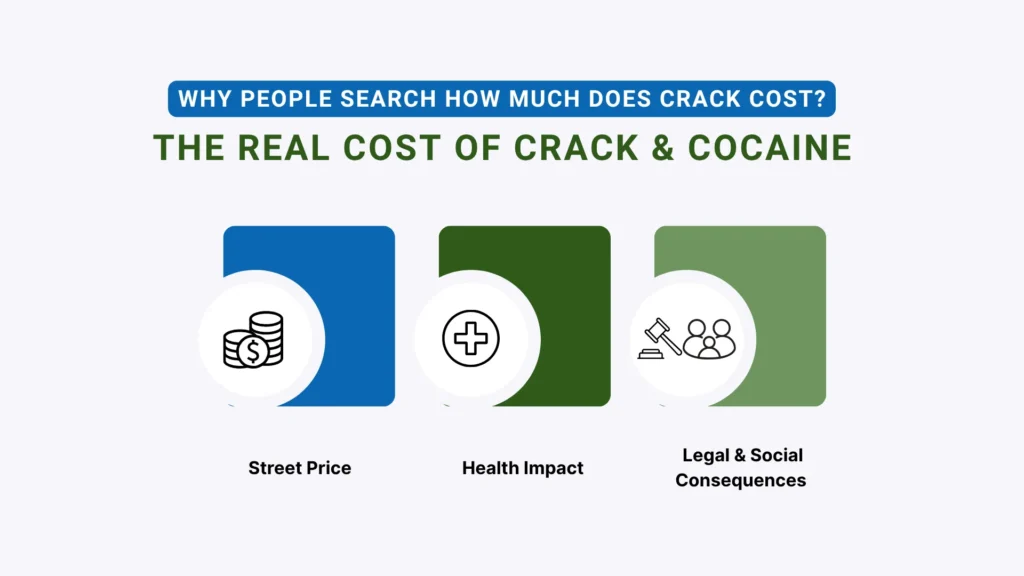
When individuals search for how much is crack a gram or how much is a crack rock, they’re usually just thinking about the dollar amount. But the actual cost of crack and cocaine goes way beyond what you pay upfront.
- Health Impact
- Smoking crack gives you this intense high that disappears really fast, which leads to using it over and over again.
- This pattern increases your chances of cocaine addiction, overdose, serious lung damage, and mental health problems.
- Legal Consequences
- Crack users here in the U.S. have historically gotten hit with much harsher sentences than individuals caught with powder cocaine.
- Getting arrested, having a criminal record, and spending time locked up creates costs that stick with you for life, both financially and personally.
- Social and Economic Fallout
- Addiction can completely destroy families.
- Jobs and housing disappear.
- Treatment costs can end up being way more than what you thought you were saving by buying that “cheap” crack rock.
If you want more solid information on health and addiction risks, the MD Rehab Centre has reliable data and support options available.
Conclusion: The Real Cost of Crack and Cocaine
So what’s the final answer of how much does crack cost? Is it $10 for a rock? $50 per gram? Here’s the reality: while we can measure what things cost on the street, the actual costs are much, much bigger.
- Crack might look “cheaper” than powder cocaine when you first glance at the prices.
- But those hidden costs lead to health problems, legal troubles, social damage make it far more expensive when you look at the whole picture.
When you start comparing crack cost, cocaine prices, and street prices, those numbers only give you half the story. What you really need to understand is that the true cost isn’t measured in dollars, it’s measured in the lives that get completely turned upside down.
How much does crack cost in the U.S. today?
Usually runs $10 to $50 per rock, but it all depends on where you are and what’s available. Prices change constantly based on demand and how hard cops are cracking down.
How much is a gram of crack compared to a gram of cocaine?
Crack might cost $20–$50 per gram while powder cocaine runs $80–$100 or more. But since crack comes in random-sized rocks, you actually end up spending way more over time.
What is the street price of a crack rock?
One rock can go for $10 on the low end, but bigger pieces cost $20, $40, or more. It all comes down to size, purity, and location.
Why do crack and cocaine prices vary so much by location?
Supply and demand, geography, law enforcement activity, and drug purity all affect prices. Big cities are usually cheaper because supply stays steady, while rural areas cost more.
What are the hidden costs of using crack besides money?
The real costs include health problems (addiction, overdose, lung damage), legal trouble (harsh sentences, criminal records), and social damage (broken families, lost jobs, expensive treatment).