Cocaine is a powerful central nervous system stimulant that significantly impacts both brain function and physical health. Unlike depressants that slow bodily processes or hallucinogens that alter perception, cocaine acts as an “upper” that accelerates heart rate, breathing, and neural activity. This stimulation creates an intense euphoric experience followed by a severe crash, establishing a dangerous cycle that drives addiction and poses serious medical risks.
What Is Cocaine?
Cocaine is derived from the coca plant but undergoes extensive chemical processing to produce the street drug. It typically appears as a white crystalline powder that is snorted, though it also exists as crack cocaine (a smokable crystal form) or can be injected intravenously. Each method delivers the same core effect – rapid onset of intense stimulation and euphoria.
Medically, cocaine has virtually no therapeutic applications in modern healthcare. While historically used as a local anesthetic, safer alternatives have replaced it in clinical practice. Today, cocaine’s primary association is with recreational use and its associated health consequences. Cocaine hydrochloride is classified as a highly addictive Schedule II stimulant with high potential for abuse and dependence.
Is Cocaine a Stimulant?
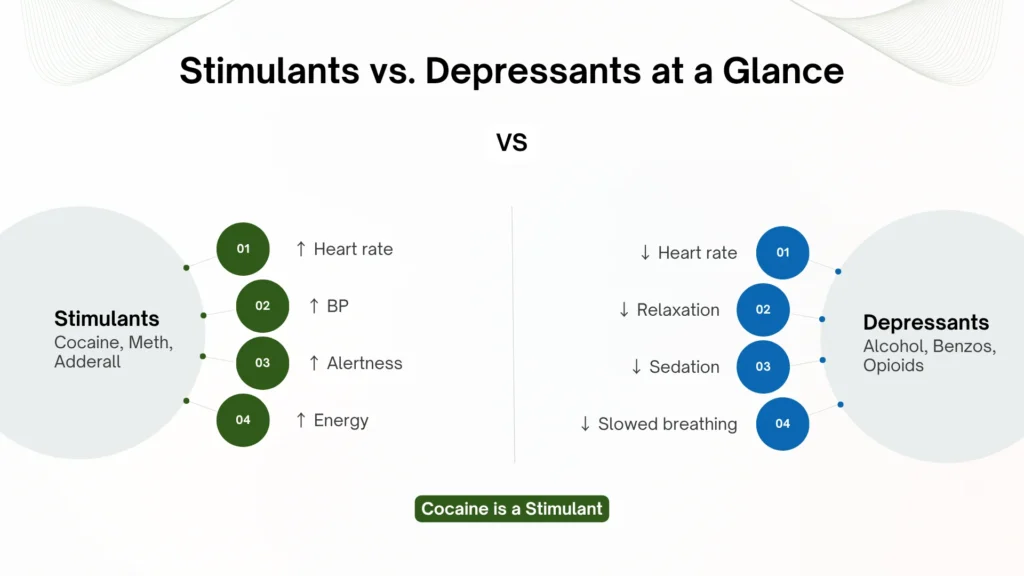
Cocaine is definitely classified as a stimulant drug, not a depressant. It accelerates central nervous system activity, increasing heart rate, blood pressure, breathing rate, and alertness. This stimulation places cocaine firmly in the “upper” category of controlled substances.
The confusion often stems from cocaine’s crash phase, where users experience fatigue, depression, and lethargy after the drug’s effects subside. However, this post-use depression represents the body’s recovery from overstimulation rather than depressant drug action. Stimulants accelerate physiological processes while depressants inhibit them – cocaine clearly functions as an accelerant.
How Cocaine Affects Brain Chemistry
Cocaine fundamentally disrupts normal neurotransmitter function by blocking dopamine reuptake in the brain’s reward pathways. This blockade causes dopamine accumulation, producing intense euphoria, heightened confidence, and increased energy. Simultaneously, cocaine affects norepinephrine systems, elevating heart rate and blood pressure.
This neurochemical disruption creates significant physiological stress. Users frequently experience anxiety, restlessness, rapid heartbeat, hyperthermia, and paranoia. The initial energy surge often transitions rapidly to exhaustion and cardiovascular strain.
Table: Stimulants vs. Depressants
| Feature | Stimulants (e.g., Cocaine) | Depressants (e.g., Benzodiazepines) |
| Effect on CNS | Speeds up activity | Slows down activity |
| Heart Rate | Increases | Decreases |
| Breathing | Rapid / shallow | Slower, deeper |
| Mood Impact | Euphoria, alertness | Calm, sedation |
| Crash/Withdrawal | Fatigue, depression | Anxiety, agitation |
Cocaine hijacks dopamine reward circuits while simultaneously overstimulating norepinephrine systems that regulate cardiovascular function.
Cocaine Use Data
Current epidemiological data reveals concerning trends in cocaine consumption across the United States:
- 10.2 million individuals aged 12+ misused stimulants including cocaine in 2022, representing an increase from 9.4 million in 2021
- Cocaine contributed to 29.7% of overdose fatalities reported to the CDC in 2022
- Cocaine-related overdose deaths increased from 1.5 per 100,000 population in 2011 to 7.3 per 100,000 in 2021 and have continued to rise in recent years.
Interestingly, approximately 3% to 7% of the U.S. population currently uses prescribed central nervous system depressants such as benzodiazepines or sleep medications, showing how widespread substance use is across different drug categories.
Why Cocaine Gives You That “Upper” Feeling
When cocaine addiction hits your system, it works fast. Your energy shoots through the roof, you feel like you can take on the world, and there’s this incredible rush of feeling amazing. That’s exactly why it gets called an upper. But here’s the catch – this whole experience only lasts about 15 to 30 minutes if you snort it, and even shorter if you smoke or inject it.
The real problem kicks in when that high disappears. The crash is brutal – you feel completely drained, anxious, or just really down. That awful feeling pushes a lot of folks to use again just to feel okay, and that’s how the addiction cycle gets its hooks in you. Studies show cocaine is a serious stimulant that really messes with your heart – jacking up your blood pressure, tightening your blood vessels, and making your heart beat all weird.
Health Problems That Go Way Beyond Feeling Good
Cocaine doesn’t just mess with your head – it goes after pretty much every part of your body. Here’s what you’re looking at:
- Heart trouble: Heart attacks, strokes, and irregular heartbeats can happen to anyone, even young, healthy folks
- Breathing problems: Chest pain, trouble breathing, and damaged lungs, especially if you’re smoking crack
- Brain issues: Seizures, bad headaches, and your memory can get messed up for the long haul
- Mental health stuff: Anxiety, paranoia, and sometimes full-blown breaks from reality
And overdosing? It’s way more common than you’d think. The difference between getting high and dying can be incredibly small.
What’s Happening Across the Country
Cocaine has been part of America’s drug problem for decades, but the last 10 years have been really bad. Overdose deaths involving cocaine have skyrocketed, and a lot of that is because dealers are mixing fentanyl into everything now.
- Deaths involving cocaine jumped from 3,822 in 1999 to almost 29,449 in 2023
- That’s a huge increase from 1.37 deaths per 100,000 people to 8.79 per 100,000
What makes things even scarier now is that you never know what you’re getting. A lot of folks don’t realize their cocaine has fentanyl in it until it’s way too late.
Can You Actually Get Clean from Cocaine?
Absolutely – but it’s not like you can just decide to quit and be done with it. Cocaine literally changes how your brain’s reward system works, so the cravings and withdrawal can be really tough to handle by yourself. Getting clean usually means:
- Medical help to get through withdrawal without it being dangerous
- Therapy and counseling to deal with the mental part of being addicted
- Ongoing support – because staying clean is something you work on long-term, not just once
Being addicted can feel hopeless, but tons of people get their lives back every single year. The trick is asking for help instead of trying to handle it all on your own.
What You Need to Remember
Cocaine isn’t a depressant – it’s a powerful stimulant that can seriously hurt or kill you. Sure, it might make you feel like you’re on top of the world for a few minutes, but the crash and all the long-term damage can destroy your body and mind.
But here’s the good news: with the right help, treatment, and support, people do recover and build great lives.
Is cocaine a stimulant or a depressant?
It’s definitely a stimulant – it speeds everything up in your brain and body, making your heart race and giving you tons of energy.
Why do they call cocaine an “upper”?
Because it gives you this quick burst of energy and makes you feel incredible and super confident.
Can cocaine work like a depressant too?
Not really. But when you crash after the high, you feel so tired and depressed that it might seem like it.
What’s the worst that can happen if you use cocaine?
Heart attacks, strokes, seizures, and overdosing are the biggest dangers, and they can happen to anyone, even if you’re young and healthy.