The cannabis world has gotten pretty wild lately with all these new compounds popping up, and two that everyone’s talking about are HHC (hexahydrocannabinol) and THC (tetrahydrocannabinol). Both can definitely change how you feel, but they’re not identical twins or anything. If you’re sitting there wondering which one packs more punch, which is safer, or even which one’s actually legal; this guide should help clear up all that confusion.
Breaking Down the Basics: HHC and THC Explained
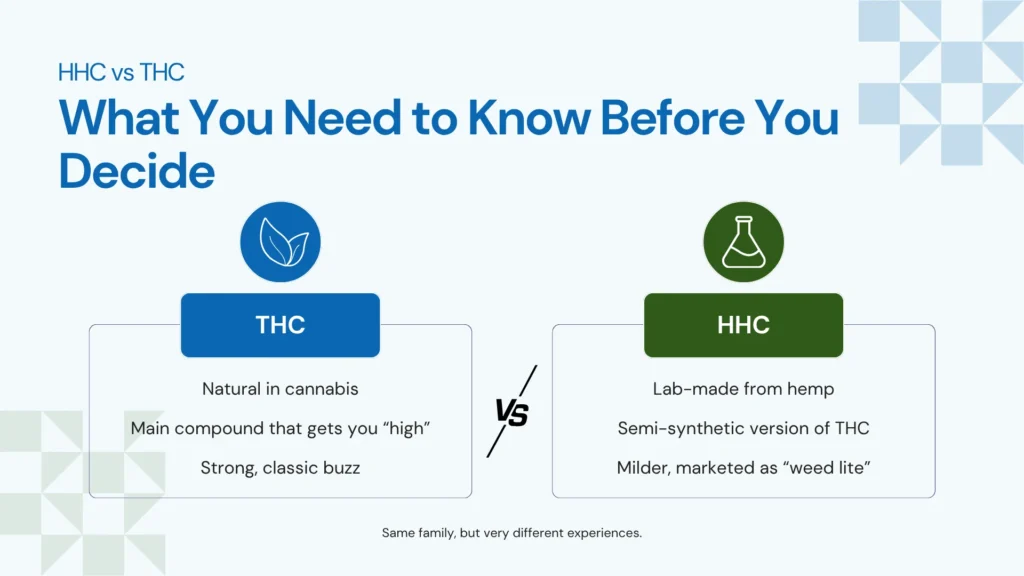
THC is that main ingredient in marijuana that gets you high. It’s basically what creates that classic cannabis buzz everyone knows about.
HHC is kind of THC’s science experiment cousin, it’s basically THC that’s been hydrogenated (think of how they make margarine from vegetable oil). While tiny amounts exist naturally in cannabis plants, pretty much all the HHC you’ll find in stores gets made in labs by tweaking hemp-derived compounds. That’s why some folks call it “semi-synthetic.”
The whole thing gets confusing because companies love marketing HHC as “weed lite” or this totally legal THC substitute. But honestly? It’s way more complicated than that.
The Science Behind the High
Both THC and HHC mess around with your body’s endocannabinoid system, especially those CB1 receptors hanging out in your brain. These little guys are what give you that euphoric, reality-bending feeling we call being “high.”
- THC latches on really tight to those receptors, which creates that intense buzz most people know.
- HHC doesn’t grip quite as well, so it usually gives you a mellower experience.
But here’s the thing – your actual experience depends on tons of stuff like how much you take, whether you got a quality product, and just how your body processes things. Some folks say HHC keeps their head clearer compared to THC’s heavier, couch-lock kind of effects.
If you want to dive deep into the nerdy science stuff about how cannabinoids mess with your brain, the National Center for Biotechnology Information (NCBI) has some solid resources.
Potency Showdown: Which Hits Harder?
This is where it gets pretty interesting.
- THC usually wins the strength contest. Most cannabis you’ll find today has somewhere between 15–25% THC, making it one seriously potent compound.
- HHC tends to be the gentler option. Most users say it feels like THC but dialed back by about 20–30%.
HHC vs THC Potency Comparison
A quick side-by-side look at how HHC stacks up against THC.
| Compound | Typical Strength | User Experience | Common Notes |
| THC | 15–25% in most cannabis strains | Strong euphoria, body high, appetite stimulation | Can cause anxiety or paranoia at higher doses |
| HHC | ~20–30% less potent than THC | Gentler, clear-headed buzz | Users say it’s easier to manage, but may feel weak |
But stronger isn’t always better, you know? Some individuals actually prefer HHC because it’s easier on them; might cut down on anxiety or that paranoid feeling you sometimes get with heavy THC doses. Then again, others feel like it’s not doing much and end up taking way more, which can become its own problem.
Bottom line: if THC is that heavyweight boxing champion, marijuana with its naturally high THC content is usually what everyone measures against, while HHC is more like that lighter sparring partner, still throws some punches, but won’t knock you out quite as hard.
Legality Matters: Where Do HHC and THC Stand?
This is honestly one of the biggest reasons folks are googling “HHC vs THC” in the first place.
- THC is still illegal at the federal level here in the U.S., even though tons of states now allow medical or recreational marijuana use.
- HHC sits in this weird legal limbo. Since it comes from hemp, some people say it’s covered under the 2018 Farm Bill. But here’s the catch – several states have already said “nope” and banned or restricted it.
The lack of real regulation also means HHC products are all over the map quality-wise. Without proper testing, some might have nasty contaminants or completely bogus potency claims on the label.
Note: If you’re thinking about trying HHC, definitely check what your state says about it first and only buy from places you actually trust.
Everyday Use: What People Report
When individuals compare HHC and THC, they’re usually less worried about the science and more focused on what it actually feels like.
- THC is famous for that strong euphoric feeling, giving you serious munchies, and that heavy body buzz that might glue you to the couch.
- HHC gets described as more of a gentle buzz – “relaxing without feeling like you got hit by a truck.”
Lots of users say HHC works better for hanging out with friends or just chilling after a long day since it might not make you as sleepy or paranoid. But if you’re looking for something stronger like actual pain relief then THC usually gets the job done better.
Health and Safety: What You Need to Know
This is where things get really serious.
THC Risks
- Can mess with your memory, focus, and coordination.
- Might trigger anxiety or paranoia in some individuals.
- Heavy, long-term use can definitely lead to dependency.
HHC Risks
- There’s barely any research, so nobody really knows what long-term effects look like.
- Lab-made stuff can have contamination issues.
- Weak regulation means you never really know what you’re getting or if it’s safe.
Both of these substances can affect your mental health and decision-making abilities. If you’re already dealing with substance use problems, the real issue isn’t picking between HHC or THC – it’s getting the help you need.
HHC vs THC: A Quick Clarification
Things get confusing when individuals hear about HHC vs THC. Here’s the simple breakdown:
- THCA doesn’t get you high when it’s in raw cannabis. It only becomes THC when you heat it up.
- HHC will get you high right away, though it’s usually gentler than THC.
If you want something that won’t get you high at all, THC is your answer. For a lighter buzz that won’t knock you out, HHC might be worth considering.
Making the Right Choice
Picking between HHC and THC really comes down to what you’re after:
- Looking for a stronger high with affects you know what to expect? → THC.
- Want something lighter that feels more manageable? → HHC.
- Want lasting health and actual stability in your life? → Neither.
That last point is the most important one. Whether we’re talking HHC or THC, depending on substances to deal with stress, trauma, or just getting through the day can turn into dependency really fast.
MD Rehab Centre: A Safer Path Forward
It’s totally normal to be curious about cannabis alternatives. But if you’ve started noticing that HHC, THC, or any other substance is starting to run your daily life, it might be time to reach out for some help.
At MD Rehab Centre in Maryland, we help individuals figure out their relationship with substances and find healthier ways to move forward. The real question isn’t “HHC vs THC” – it’s how to get your well-being back without needing either one.
Is HHC stronger than THC?
Not really. HHC is usually about 20–30% weaker than THC. Most people describe it as a smoother, more manageable high compared to THC’s punchier effects.
Is HHC legal while THC isn’t?
It depends. HHC falls into a legal gray zone since it’s made from hemp, but some states have already banned it. THC, on the other hand, is still federally illegal—though many states allow it for medical or recreational use.
What’s the difference between HHC and THC highs?
THC is known for strong euphoria and a heavier body high. HHC usually feels lighter and clearer, with less risk of anxiety or paranoia for some users.
Which one is safer HHC or THC?
THC has been studied a lot more, so its risks are better understood. HHC hasn’t been researched enough yet, and poor-quality, unregulated products can be unsafe.
Can HHC show up on drug tests?
It might. Even though HHC isn’t exactly THC, some drug tests could mistake it for THC. Since there’s little research, there’s no guarantee either way.