When most people picture alcoholism, they imagine someone whose life has completely fallen apart. Yet in reality, many individuals who struggle with alcohol dependency appear successful, composed, and in control. They go to work on time, pay their bills, and maintain relationships, but privately, they rely on alcohol to get through each day.
This group is often described as high-functioning alcoholics, individuals who live seemingly normal lives while silently battling Alcohol Use Disorder (AUD). Although not an official medical diagnosis, this term highlights how deeply alcohol can take root in a person’s daily functioning without outward chaos.
Understanding the behaviors and warning signs of a functional alcoholic can help families, partners, and friends recognize the problem early, before it becomes life-threatening.
What “High-Functioning Alcoholic” Really Means
The phrase “high-functioning alcoholic” refers to someone who meets several criteria for Alcohol Use Disorder but still manages to perform well in daily responsibilities. According to the National Institute on Alcohol Abuse and Alcoholism (NIAAA), AUD ranges from mild to severe and is diagnosed based on patterns of consumption, tolerance, withdrawal symptoms, and continued use despite harm.
A functional alcoholic might:
- Limit drinking to evenings or weekends to maintain appearances.
- Excel at work yet secretly drink before meetings or social events.
- Justify drinking as “stress relief” or “reward” for hard work.
Because these individuals remain productive, their drinking is often overlooked or normalized by those around them. However, functionality does not equal wellness, dependence can still lead to physical, emotional, and relational damage over time.
Warning Signs and Habits of a Functional Alcoholic
Recognizing functional alcoholic signs can be difficult since the person often hides or minimizes their behavior. Here are the most common traits and characteristics of an alcoholic who appears high-functioning:
✅ Increased Tolerance – Needing more alcohol to feel relaxed or social.
✅ Denial and Rationalization – Dismissing concern with phrases like “I’m not like them” or “I can stop anytime.”
✅ Memory Lapses or Blackouts – Forgetting conversations or actions after heavy drinking.
✅ Drinking Alone or in Secret – Hiding bottles, sneaking sips, or minimizing quantities.
✅ Mood Swings and Irritability – Especially when unable to drink.
✅ Neglecting Health – Skipping meals, poor sleep, or ignoring doctor’s advice.
✅ Prioritizing Alcohol Over Responsibilities – Drinking despite family conflict or deadlines.
✅ Excelling Publicly, Struggling Privately – Maintaining a perfect image while feeling dependent internally.
✅ Physical Symptoms – Shaking hands, fatigue, weight changes, or stomach issues.
✅ Failed Attempts to Cut Down – Repeated efforts to quit or “take breaks” without success.
Even if someone still performs well at work or school, these signs point toward dependency, not control.
Personality Traits Common Among Alcohol-Dependent Individuals
While there isn’t a single “alcoholic personality,” researchers and clinicians recognize recurring alcoholic personality traits among people who struggle with dependence:
- Perfectionism: Many high-functioning drinkers set unrealistically high standards for themselves and use alcohol to relieve pressure.
- High Stress Tolerance: They may appear calm in crises but turn to alcohol when alone.
- Denial and Avoidance: Refusing to discuss drinking habits or emotions openly.
- Impulsivity or Risk-Taking: Acting before thinking, especially when stressed or intoxicated.
- Emotional Suppression: Using alcohol to numb anxiety, grief, or low self-esteem.
These traits of an alcoholic often create a dangerous cycle, success reinforces denial, making treatment feel unnecessary until consequences worsen.
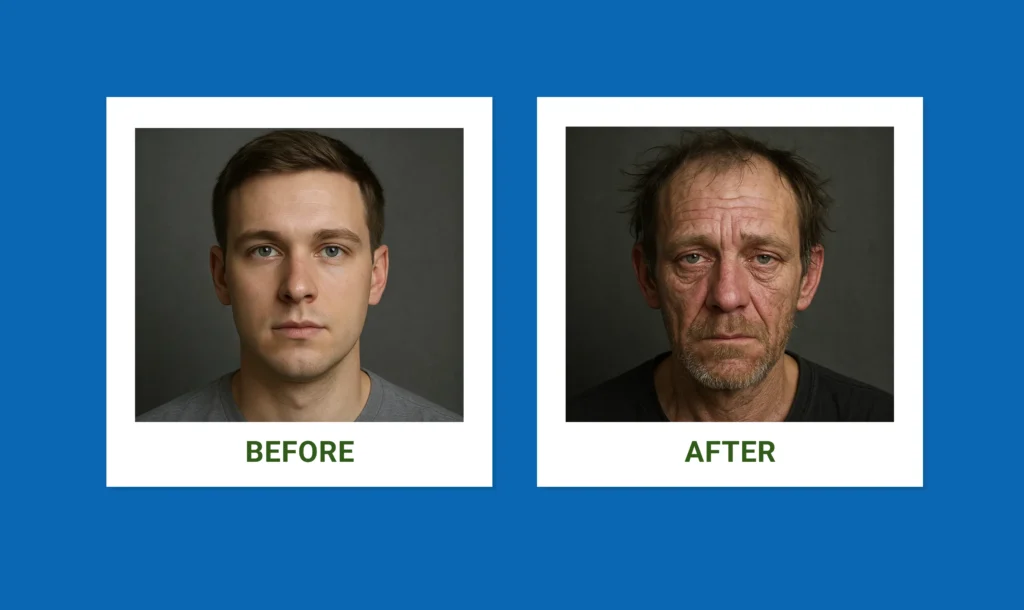
Faces of Alcoholism: Physical and Emotional Changes Over Time
While we shouldn’t stigmatize appearances, long-term alcohol use gradually affects the body and mind. Comparing faces of alcoholics before and after recovery can show these physical markers, but the focus should always remain on health, not shame.
Common physical changes include:
- Puffiness or redness in the face
- Bloodshot eyes
- Weight loss or bloating from liver damage
- Dull or yellowing skin
- Tremors or unsteady movements
Emotionally, the person may shift from confident and sociable to withdrawn, anxious, or irritable. These subtle shifts often signal that dependence has progressed beyond social drinking.
Begin Healing With Compassionate Care
Our team offers evidence-based treatment programs for addiction, mental health, and dual diagnosis recovery.
The Science Behind Appetite Loss: Why Alcoholics Often Don’t Eat
A frequent but overlooked symptom of alcoholism is poor nutrition. You might wonder, why do alcoholics not eat?
Alcohol interferes with digestion, nutrient absorption, and appetite regulation. It also replaces calories that would normally come from food, meaning drinkers feel “full” while still becoming malnourished. Chronic drinking can lead to:
- Gastritis and nausea that reduce appetite
- Alcoholic ketoacidosis, a dangerous buildup of acids in the body
- Vitamin deficiencies (especially B-vitamins and magnesium)
- Muscle loss and fatigue
When recovery begins, balanced nutrition and hydration become essential steps in restoring health and reversing damage.
When Drinking Alters Behavior: How Drunk People Act Differently
Alcohol affects brain chemistry, which is why drunk people act differently from one another. Some become talkative and affectionate, while others turn quiet or aggressive.
Unversity of Missouri Research identified four “types of drunk people”:
- Hemingway Type: Appears normal while drunk.
- Mary Poppins Type: Friendly and outgoing.
- Nutty Professor Type: Shy when sober, wild when intoxicated.
- Mr. Hyde Type: Angry, impulsive, and unpredictable.
Understanding these behavioral differences helps families recognize that even calm or “polite” drunks may still have serious dependency issues.
Bedwetting and Alcoholism: Is It a Warning Sign?
Occasional bedwetting after heavy drinking can be embarrassing but is medically explainable. Is bedwetting a sign of alcoholism?
Not by itself, but it can indicate excessive or chronic drinking.
Alcohol acts as a diuretic and depresses the brain’s control over bladder function. Combined with deep sleep or sedation, this can cause incontinence.
If it happens repeatedly or alongside other symptoms (tremors, confusion, dehydration), it may signal more advanced alcohol dependence or neurological effects of long-term use.
Recognizing Alcoholism in a Loved One or Spouse
Many people type “is my husband an alcoholic?” after months or years of silent worry. Spotting the problem early is the first step toward helping them, and protecting your own wellbeing.
Common signs of an alcoholic partner include:
- Frequent mood changes or irritability when alcohol isn’t available
- Hiding bottles or lying about consumption
- Drinking before or during work hours
- Denying obvious symptoms or minimizing incidents
- Financial issues caused by alcohol spending
- Prioritizing drinking over family time
If you suspect this, approach gently:
“I’ve noticed you’ve been drinking more lately, and I’m really concerned about how it’s affecting you. Can we talk about it?”
Avoid blame or ultimatums; instead, encourage open dialogue and professional evaluation.
Self-Screening Tools: Simple Tests to Understand Risk
If you’re wondering whether your own or someone else’s drinking is unhealthy, simple screening tools can help.
- CAGE Questionnaire: 4 short questions (“Have you ever felt you should Cut down? …”).
- AUDIT (Alcohol Use Disorders Identification Test): A 10-item checklist used by healthcare professionals.
While these cannot replace a diagnosis, high scores suggest the need for a formal assessment by a clinician or at a certified treatment facility.
You can also visit the NIAAA or SAMHSA websites for anonymous online tools and treatment locators.
Evidence-Based Treatment Options That Work
Recovering from functional alcoholism requires more than willpower, it involves comprehensive care addressing both body and mind.
Treatment options include:
- Medical Detox: Safely managing withdrawal under supervision.
- Inpatient Rehabilitation: Structured therapy and support in a residential setting.
- Outpatient Programs: Flexible therapy while maintaining work or family life. (Internal link placement – Contact our rehab center to explore these options.)
- Behavioral Therapies: Cognitive Behavioral Therapy (CBT), Motivational Enhancement Therapy (MET), and family counseling.
- Medication-Assisted Treatment: Naltrexone, acamprosate, or disulfiram to reduce cravings or prevent relapse.
No single path fits everyone, the best recovery plan combines medical care, therapy, social support, and ongoing relapse prevention at a Rehab Center.
Supporting a Partner Through Recovery
Learning how to deal with an alcoholic partner means balancing compassion with boundaries. Recovery during alcohol addiction treatment is a long process, and relapse does not mean failure.
Helpful tips for loved ones:
- Attend support groups like Al-Anon for coping strategies.
- Encourage, but don’t enable. Avoid covering for their behavior.
- Create safety plans for moments when drinking escalates.
- Celebrate progress, no matter how small.
Emotional safety for both partners is crucial, and professional guidance can make the difference between burnout and breakthrough.
Take Control Before It Takes Over
You don’t have to hit rock bottom to ask for help. Discover safe, confidential alcohol recovery programs designed for your lifestyle.
Can a high-functioning alcoholic ever truly quit drinking without rehab?
While some may manage short-term sobriety on their own, long-term recovery from functional alcoholism is difficult without professional support. Treatment programs offer therapy, medical detox, and relapse prevention, addressing both the physical and emotional roots of alcohol dependence.
What happens when a functioning alcoholic stops drinking suddenly?
Abruptly quitting alcohol after prolonged heavy use can cause dangerous withdrawal symptoms, including tremors, anxiety, seizures, and delirium tremens (DTs). That’s why medical detox under supervision is strongly recommended to ensure safety and stabilization.
Are high-functioning alcoholics aware of their problem?
Often, they’re not, or they rationalize it as stress management or “social drinking.” Because they still meet life’s responsibilities, denial runs deep. Awareness typically grows when relationships strain or health begins to decline.
How does alcohol addiction affect relationships and communication?
Alcohol often causes mood swings, secrecy, and emotional distance, making honest communication difficult. Partners may feel neglected, anxious, or resentful, which creates cycles of mistrust. Family or couples therapy during recovery helps rebuild understanding and connection.
What are early red flags of alcoholism in women or professionals?
Subtle warning signs include daily “unwinding” drinks, hiding alcohol in handbags or desks, morning nausea, or missed work deadlines. High-achieving individuals often use alcohol to manage burnout or perfectionism, masking dependency until it escalates.