In recent years, weed might be legal in Maryland now for adults over 21, but that doesn’t mean it’s harmless. You might be dealing with fuzzy thinking, feeling tired all the time, or trouble sleeping without even realizing your smoking habit is the culprit. Quitting weed isn’t about following rules; it’s about getting your life back.
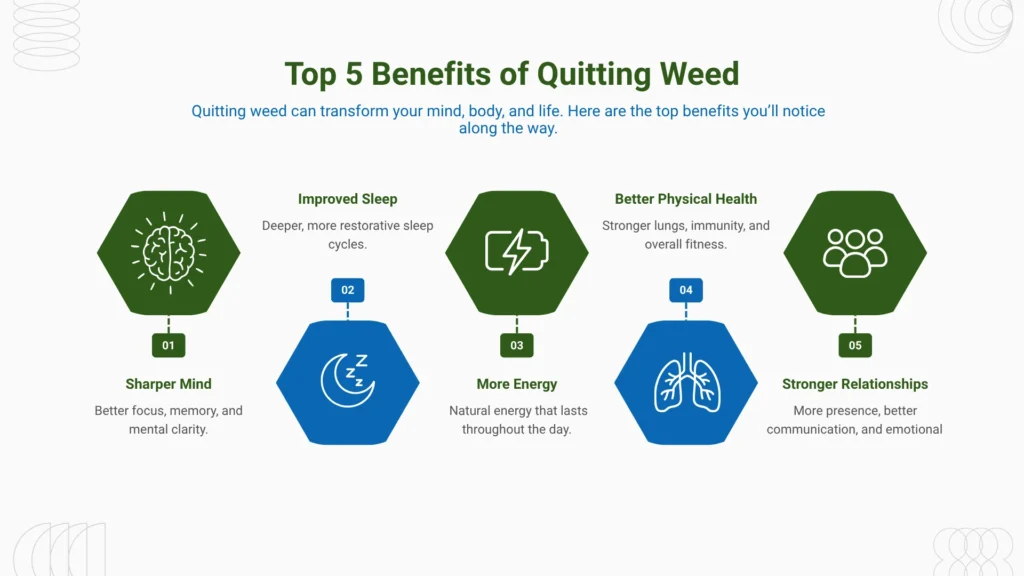
Why Quit Weed? Here’s What Changes
If you’re wondering “Will this actually make a difference?” Here’s what really happens:
- Your Health Improves Fast Within weeks of quitting smoking weed, breathing gets easier and that persistent cough disappears. Your energy comes back, and mornings don’t suck anymore. If you need help with the process, Maryland marijuana rehab centers can make it way smoother.
- Your Brain Works Again It’s like a fog lifts. You can focus, remember things, and actually get stuff done. Conversations with friends feel real again because you’re fully present.
- Your Sex Life Gets Better Nobody talks about this, but long-term use kills your libido and sensitivity. Quitting brings back your drive and confidence with your partner.
- You Feel Stronger Better lungs, more stamina, fewer headaches. Your body finally keeps up with what you want to do.
- Your Emotions Balance Out Less mood swings and less anxiety are signs of quitting smoking weed. You feel more grounded instead of just numb all the time.
- Life Gets Easier More money, better mornings, energy for hobbies and projects you’ve been putting off. Everything just flows better.
- Relationships Improve You’re more present and reliable. Friends and family notice the difference, and sometimes you even inspire others to make changes too.
Life After Quitting Weed: What to Expect
Quitting weed isn’t about flipping a switch. It’s honestly more like coming home to yourself, one day at a time, and feeling the benefits from quitting weed along the way. Picture it like emerging from a long tunnel: at first it’s dark and scary, but slowly you start seeing light ahead. Here’s the real deal on what you might feel
- Days 1–2: You’ll probably feel like crap, restless, can’t sleep, everything annoys you. Your body is basically throwing a tantrum because it’s confused. But hey, this cannabis withdrawal storm doesn’t last forever.
- Days 3–7: The marijuana cravings hit hard, sleep is all over the place, and your brain feels like it’s wrapped in cotton. But here’s the thing, your lungs are already healing, and you’ve already done the scariest part: you started your journey to quit weed.
- Weeks 1–2: Something beautiful starts happening during cannabis recovery. Your energy slowly comes back to life. You’ll actually feel hungry for real food again, and sleep doesn’t feel like wrestling with your pillow anymore. Those little moments of mental clarity? They’re like finding treasure you forgot you had—major benefits of quitting weed.
- Weeks 3–4: The constant marijuana craving noise in your head gets quieter. Your mood stops bouncing around like a pinball, and mornings don’t feel like punishment anymore. That spark of motivation starts flickering back; it’s subtle at first, like dawn breaking, but it’s real cannabis recovery progress.
- Around 1 Month: Your sleep becomes this deep, healing thing you forgot existed. Your emotions feel solid instead of all over the map, and your brain actually works when you need it to. Those scary THC cravings? They’re more like annoying whispers now. You start celebrating the small wins of marijuana sobriety, and damn, they feel good.
- 100 Days: This is where the magic happens in your cannabis-free journey. You might look in the mirror and think “Who is this person?” Sleep feels like medicine, weed cravings barely whisper, and your mind feels sharp and alive again. The confidence hits different because you proved to yourself; you’re stronger than you thought.
- 6 Months–1 Year: Everything settles into this amazing new normal. Your health, your relationships, your drive; they all feel solid and real. The long-term benefits of quitting marijuana become clear: life doesn’t just feel better; it feels like you built yourself a whole new world with your bare hands.
Cannabis Recovery Timeline: What to Expect After Quitting Weed
This simple timeline shows the key stages of recovery and the benefits you can expect as the body and mind adjust to life without marijuana.
| Days 1–2 | Feeling restless, irritable, or having trouble sleeping; body adjusting to no THC. |
| Days 3–7 | Strong cravings and brain fog; lungs begin healing; first milestone achieved. |
| Weeks 1–2 | Energy starts returning, appetite normalizes, sleep improves; clarity begins. |
| Weeks 3–4 | Cravings ease, mood steadies, mornings feel lighter; motivation returns gradually. |
| Around 1 Month | Sleep deepens, emotions stabilize, focus improves; cravings minimal. |
| 100 Days | Mind feels sharper, sleep restorative, confidence grows; cannabis-free routine sets in. |
| 6 Months–1 Year | Health, energy, relationships, and motivation strengthen; long-term benefits become clear. |
Challenges and Symptoms of Quitting Weed
Let’s get real quitting weed isn’t a walk in the park. It’s more like hiking uphill with a heavy backpack, but here’s the thing: every step forward makes the next one easier. Your body is just trying to remember how to work without weed, and that takes time.
What You’ll Probably Go Through
- Restlessness & Feeling On Edge: Those first few days of marijuana withdrawal, you’ll feel like you can’t sit still and everything gets under your skin. It’s like your whole system is having a mini meltdown—totally normal when breaking marijuana addiction.
- Cravings Hit Different: Around days 3–7, the urge to smoke can feel overwhelming. Your brain is basically screaming for the THC it’s used to. This isn’t you being weak; it’s just your mind going through marijuana detox.
- You’ll Feel Wiped Out: Your energy might crash hard during weed withdrawal at first. Don’t worry, it’s temporary. Within a couple weeks, you’ll start feeling human again.
- Your Stomach Gets Weird: Nausea, bathroom issues, or your appetite going haywire, yeah! it sucks when quitting marijuana. Drink tons of water, eat simple foods, and add some fiber. Your gut just needs time to chill out.
- Physical Stuff That’s Annoying: Headaches, heart racing, feeling hot one minute and cold the next during cannabis detox. Your body’s basically doing spring cleaning, flushing out all the THC. It passes.
- Sleep Becomes a Nightmare: You might lie awake staring at the ceiling or have crazy vivid dreams when you finally sleep. Your brain is literally relearning how to sleep without marijuana. Try sticking to a bedtime routine and maybe some melatonin.
- Your Emotions Go Haywire: Feeling anxious, paranoid, or just off during cannabis withdrawal? Your brain chemistry is trying to balance itself after marijuana addiction. Writing in a journal, doing breathing exercises, or talking to people who get it can really help.
Just Ripping the Band-Aid Off
Some people go cold turkey, just stop completely, all at once. Yeah, the first few days might feel brutal with stronger cravings, mood swings, and other quit weed symptoms, but you also get through the worst part faster. Just make sure you’ve got people in your corner and healthy ways to deal with the tough moments. Future you will be so grateful you pushed through.
Stop Smoking Marijuana Today
Some people just quit completely, all at once no gradual cutting back, no waiting for the right time.
Lifestyle & Recovery Experiences
- Months After Quitting Weed A few months in, your head finally clears up. You know that cloudy, can’t-think-straight feeling? It’s gone. You actually have energy when you need it, and you can pay attention to important stuff again. Every clean month feels like a win that keeps building up.
- I Quit Cigarettes but Not Weed Hey, dropping cigarettes is tough that’s a big deal. Once you beat one habit, the next one doesn’t seem so scary. You already know you can do hard things.
- I Quit Weed After Shrooms Some people have those deep experiences that change how they see everything. If that made weed feel useless to you, other people feel the same way.
- Quitting Weed, Alcohol, and Tobacco Together Stopping everything at once is rough, but it works for some people. With good planning and help, it’s like starting fresh—scary but worth it.
- Quitting Weed Testimonials Real people tell their stories, and they matter. One person on Reddit said: “Quitting weed was the best thing I ever could have done. It’s made me a way better musician.” These are real people, not fake success stories.
Supplements & Aids
Best Supplements After Quitting Weed (Age 15–20) If you’re younger and your body’s still figuring itself out, things like Omega-3s, vitamin D, magnesium, and probiotics can be gentle helpers. They support your mood, energy, and sleep while your system gets back to normal.
Best Supplements to Quit Weed L-theanine can calm those jittery feelings, melatonin helps with sleep (just don’t rely on it forever), and B-complex vitamins give your body the tools to stay balanced during the rough patches.
Getting Help When You Need It
Professional Support Center Sometimes doing this alone just feels impossible, and honestly? That’s completely normal. Places like MD Rehab Center get it that’s why they offer real counseling, actual strategies that work, and you’re surrounded by people who’ve been exactly where you are. It’s like having backup while you figure your life out again.
Ready to Reap the Benefits of Quitting Weed?
Get the support you need to safely navigate the journey and experience the real benefits of quitting weed.
Treatment Programs That Fit Your Life Outpatient programs, therapy, or support groups mean you can get help without putting your whole life on pause. Think of it like having someone in your corner who actually wants to see you win when everything feels hard.
What are the benefits of quitting weed?
Mind becomes sharper, sleep improves, energy returns, and connections with others feel stronger.
What are common quit weed symptoms?
Irritability, restlessness, cravings, headaches, and trouble sleeping may appear in the first few days.
How long do withdrawal symptoms last?
The most intense symptoms usually last about a week, then gradually ease over 2–4 weeks.
Does quitting weed help with anxiety?
Yes, quitting weed often reduces anxiety over time as the brain and body rebalance without THC.
Is professional support helpful when quitting weed?
Provides coping strategies, accountability, and guidance from those experienced in quitting marijuana.