Alcohol withdrawal symptoms can lead to seizures, hallucinations and a potentially fatal condition known as delirium tremens within 24 to 72 hours after the last drink. That’s why “just stopping” at home is not the same as safe detox.
Getting help from a professional MD rehab helps you to prevent relapses and achieve long-term sobriety. Taking the first step toward treatment is essential.
| Featured Snippet Definition Alcohol detox is the process of a medically supervised method to rid your body of alcohol while managing (with medications) the physical and neurological symptoms from withdrawal. It generally lasts between 5 and 14 days, but it is the initial step in addiction recovery. |
What Is Alcohol Detox?
Alcohol detox syndrome is the time frame over which your body eliminates alcohol after heavy or long-term use. It’s not a standard treatment but rather it’s a first-phase treatment for alcohol use disorder.
Alcohol works as a central nervous system suppressant. Gradually, the brain compensates by increasing excitatory activity to maintain homeostasis. That excitation is unopposed when alcohol leaves rapidly. The nervous system overshoots. It is that imbalance which creates withdrawal.
Detox does not treat the underlying patterns of alcohol use disorder. It stabilizes the body. While all inpatient, residential and outpatient rehab are all about getting you started on the longer course of behavioural recovery.
Do You or Your Loved Ones Need Alcohol Detox Support?
You don’t have to figure this out alone. Our admissions team is available now to answer your questions, verify your insurance, and help you take the first step.
Common Alcohol Withdrawal Symptoms
How much and how often someone drinks, in addition to their physical health and history with withdrawal, can all affect the severity of symptoms. Someone who drinks a six-pack on weekends is not going to go through the same withdrawal as someone who drinks a fifth of liquor every day for years.
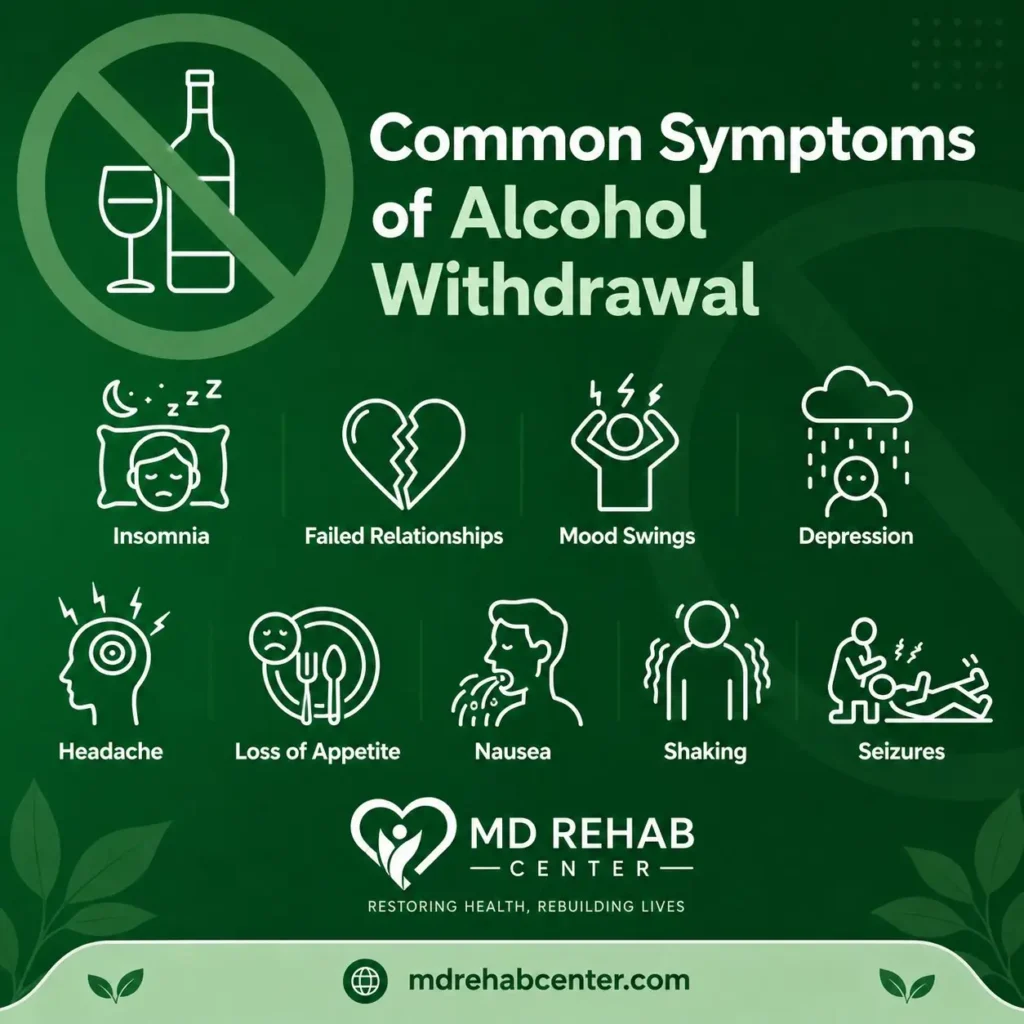
Mild to moderate withdrawal symptoms include:
- Anxiety, irritability, and mood shifts
- Sweating and chills
- Nausea and vomiting
- Headache and fatigue
- Insomnia
- Elevated heart rate and blood pressure
- Hand tremors (“the shakes”)
Severe withdrawal symptoms
- Seizures (most common between 12–48 hours after last drink)
- Hallucinations (“alcohol hallucinosis”)
- Extreme confusion and disorientation
- Fever and profuse sweating
- Delirium tremens (DTs)
| Delirium tremens (DTs) is a condition where heart rate increases, leading to potentially life-threatening blood pressure elevation and disorientation. Only 3–5% of individuals withdrawing from alcohol suffer through delirium tremens, but the mortality rate in untreated patients can be up to 15% or higher. |
How Long Do Alcohol Withdrawal Symptoms Last?
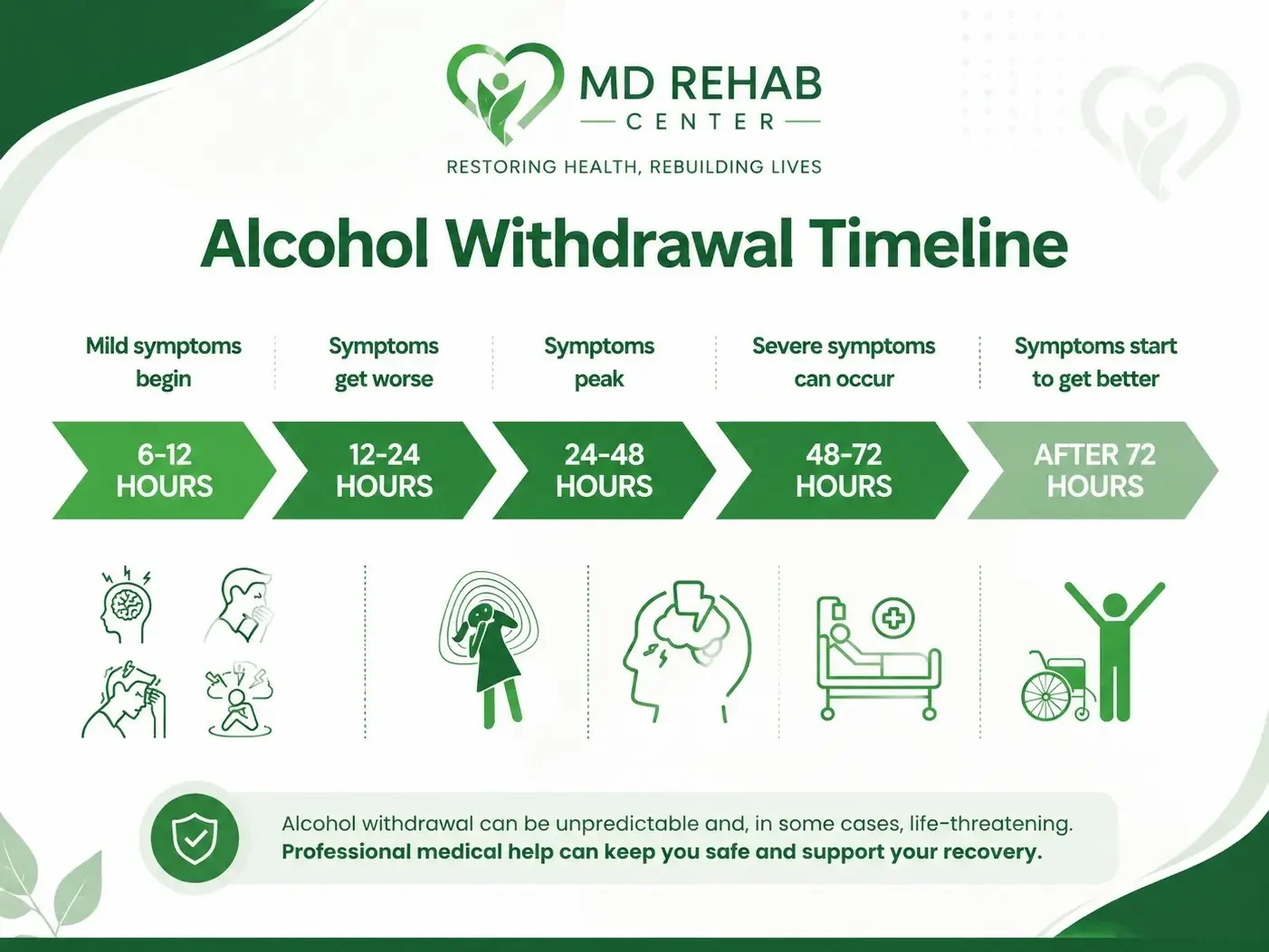
Withdrawal from alcohol moves through a predictable sequence, though timing varies by individual.
| Time After Last Drink | What Typically Happens |
| 6–12 hours | Mild symptoms begin: anxiety, shaking, nausea, insomnia |
| 12–24 hours | Acute symptoms subside for most people; continued monitoring is needed |
| 24–72 hours | Peak risk window, highest risk of seizures and delirium tremens |
| Days 4–7 | Acute symptoms subside for most people; continued monitoring needed |
| Weeks 2–4 | Some people experience post-acute symptoms: fatigue, mood swings, sleep difficulty |
| Months 1–6+ | PAWS (Post-Acute Withdrawal Syndrome) can cause low-grade symptoms for months |
Why Medical Supervision Matters During Alcohol Detox
Withdrawal syndrome is actually one of the few substances that can lead to death. Opioid withdrawal is difficult to handle, benzo detox is dangerous, but alcohol withdrawal is deadly and life-threatening (in severe cases). That’s why home detox isn’t recommended, especially without any professional staff.
Medical supervision during alcohol detox in our rehab serves several distinct functions:
1. Continuous symptom monitoring –CIWA-Ar scale (Clinical Institute Withdrawal Assessment for Alcohol)
2. Medication management
3. Nutritional support
4. Dual diagnosis recognition
What Happens at an Alcohol Detox Center?
From the moment someone arrives, our intake and assessment process is structured to reduce uncertainty and medical risk simultaneously.
Phase 1- Intake and assessment
An admissions team offers a detailed medical/psychosocial evaluation: history of drinking, previous withdrawal experiences, other medications taken, current health issues, and mental health screening.
Phase 2- Medical stabilization
Following the intake assessment, clinicians then initiate a medication-assisted withdrawal management protocol. These usually consist of titrated benzodiazepines based on the severity of symptoms, hydration, and other nutritional interventions. Monitoring of vitals happens regularly in the initial 72 hours (high-risk period).
Phase 3- Symptom management
Sleep, anxiety, nausea and tremors are all actively treated – not just “ridden out”. The goal is not just to survive, but to stabilize the person for interaction with what comes next in treatment.
Phase 4- Transition planning
Detox teams that do their job well will avoid discharging patients into a vacuum. Halfway through a normal detox, and the discussion about what comes after, including inpatient rehab, partial hospitalization, and intensive outpatient. The bridge from detox to continuing care is one of the pivotal moments of the entire treatment, and how it is managed actually has an impact on long-term conditions.
Need alcohol detox support? Speak with admissions now.
What’s the Difference between Alcohol Detox vs. Alcohol Rehab?
Detox is like giving someone an initial bed to stabilize the ability to do rehab work. Initial detox without continued rehab means much of the crucial work remains undone. Those two terms are often used synonymously, though they shouldn’t be.
Alcohol detox works on the physical aspect of dependence. Its goal is medical safety.
Duration: typically 5–10 days.
Alcohol rehab offers treatments for the psychological, behavioral, and social aspects of an alcohol use disorder. Its goal is lasting recovery.
Duration: 28 days–90+ days (depending on level of care)
Levels of care after detox:
| Level | Description | Best For |
| Residential / Inpatient | 24/7 structured care, on-site living | Severe AUD, unstable home environment, dual diagnosis |
| Partial Hospitalization (PHP) | 5–6 hours/day, several days per week | Step-down from residential, stable housing |
| Intensive Outpatient (IOP) | 3–4 hours/day, 3+ days per week | Moderate severity, strong support system |
| Standard Outpatient | Weekly or biweekly sessions | Mild AUD, maintenance phase |
Treatment Options After Detox
Detox keeps the body free of alcohol. Recovery will only hold if what comes next happens.
Our expert physicians utilize behavioral therapies and dual diagnosis treatment to establish an alcohol withdrawal life. These therapies prevent relapses and leads long-lasting, healthy lives, including:
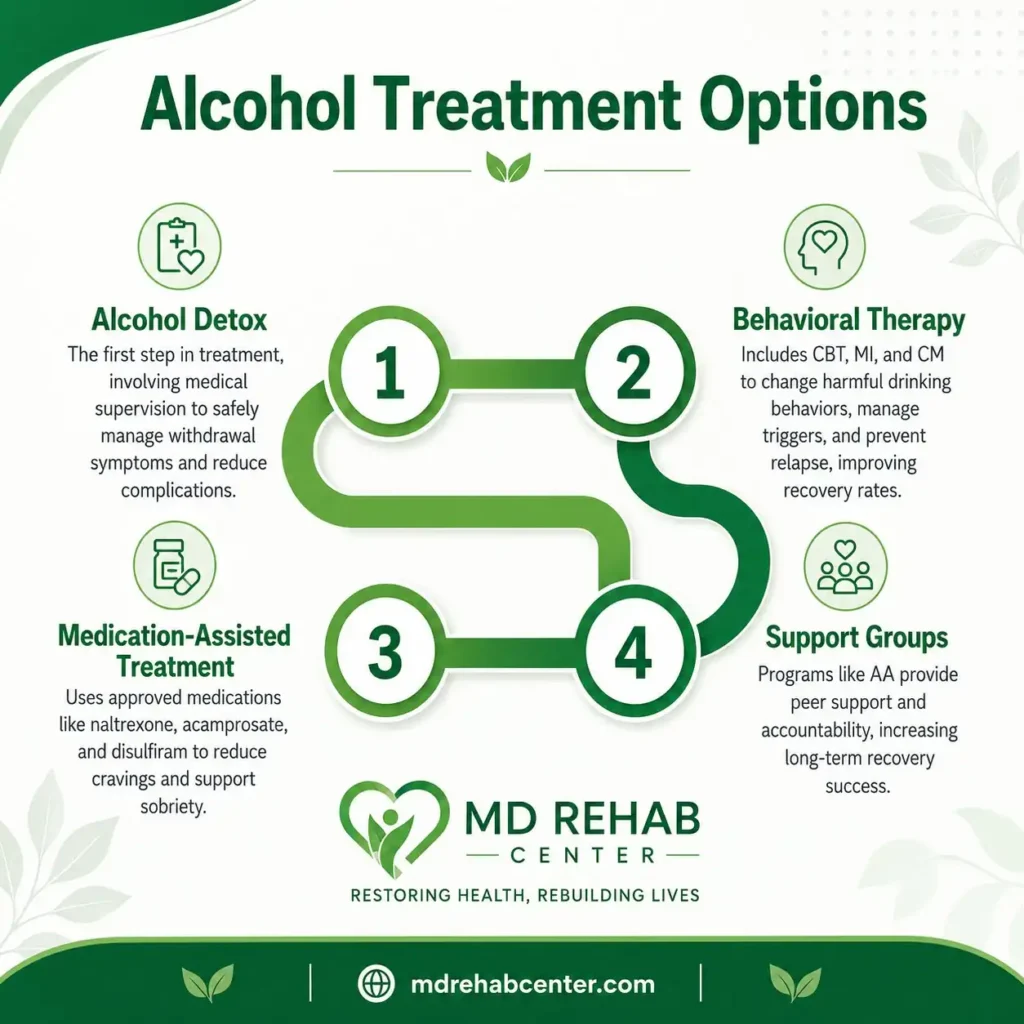
- Cognitive Behavioral Therapy (CBT): In CBT, patients learn to recognize thoughts and situations that prompt drinking and develop alternative responses.
- Motivational Enhancement Therapy (MET): It is more effective when done early, before emotional therapy.
- 12-Step Facilitation: Supportive participation on a limited basis with Alcoholics Anonymous or other mutual-help groups; offers connection and accountability.
- Dialectical Behavior Therapy (DBT): Ideal for those with concurrent emotional regulation issues or trauma.
- Family Therapy: Alcohol use disorder impacts whole families. Involving family members in treatment leads to improved engagement and relapse prevention.
Medication Options for Alcohol Use Disorder
Medication-assisted treatment for AUD is still underused, partly due to gaps in prescriber training.
The FDA has approved three medications specifically for alcohol use disorder:
1. Naltrexone (oral or injectable Vivitrol)
2. Acamprosate (Campral)
3. Disulfiram (Antabuse)
How to Find Professional Alcohol Rehab
The process of finding treatment can feel overwhelming, especially in a moment of crisis. A few practical pointers:
Start with a phone call, not a search engine rabbit hole. Most reputable treatment centers offer free assessments and can walk you through insurance coverage, level of care, and what to expect before you commit to anything.
Ask the right questions:
- Is the facility licensed and accredited (CARF, Joint Commission)?
- Do they offer medically supervised detox on-site, or will I be referred out?
- What does a typical day look like in treatment?
- Is medication-assisted treatment available if appropriate?
- What does aftercare or discharge planning look like?
MD Rehab provides medical detox, intensive outpatient program (IOP), and aftercare for a full continuum of care. Our admissions staff can directly answer any of your general questions, check your private insurance and clarify the choices ahead of you without pausing your treatment.
It’s Never Too Late to Start Over — Take the First Step Now
Frequently Asked Questions
What to expect after rehab?
After rehab, the majority of individuals can transition into post-care such as counselling, support groups, and sober living. Achieving emotional balance, cravings, and the need to rebuild routines are all common during early recovery.
How do they treat alcohol withdrawal in rehab?
Alcohol withdrawal is generally treated using medical supervision. Sometimes, it is necessary to use prescription benzodiazepines for the prevention of severe withdrawal symptoms. Vitamins, hydration, and monitoring are the best manageable ways leads to healing.
What is the most successful treatment for alcoholism?
The most efficient method is to combine behavior therapy & support groups with medications. The long-term outcome is usually dependent on ongoing support and relapse prevention.
What are the 4 stages of alcoholism recovery?
The stages generally include precontemplation, reflection, action, and then maintenance. Each stage is a reflection of growing awareness and determination to improve.
What do 10 years of alcoholism do to your body?
Long-term alcohol usage can harm the heart, liver, brain and nervous system. Also, it increases the risk of developing conditions such as cirrhosis, memory issues, and certain cancers.
What are the top 3 worst addictions?
Commonly considered serious addictions are the use of opioids, alcohol, and nicotine because they risk health and dependency. They can be both physically and psychologically hazardous.