One of the most dreaded experiences in all of addiction recovery is heroin withdrawal. Symptoms are severe, cravings are insatiable, and the likelihood of relapse during withdrawal is exceedingly high. However, it is the essential first step in building a life without heroin.
Knowing what your body will experience alleviates the fear and allows you to choose the right rehab facility near you. The medically monitored detox program at MD Rehab Center prepares patients for every stage of heroin withdrawal in a safe environment, providing 24/7 clinical support and evidence-based treatment when needed.
What Is Heroin Withdrawal?
Definition
Heroin withdrawal symptoms occur when a heroin user who is dependent on the opioid suddenly reduces or stops their intake.
With heroin erased and the brain no longer flooded with an artificial tsunami of dopamine, it enters an acute neurochemical imbalance. The outcome is a sequence of highly upsetting physical and psychological symptoms that can vary from unpleasant to life-threatening.
Why Does Withdrawal Happen?
When you repeatedly use heroin, your brain’s opioid receptors become less sensitive, and the body decreases its own natural production of opioids. Now this is the neurophysiological foundation of hatred dependence. And the more chronic and extensive the use, the greater the withdrawal, because your brain has adapted to functioning with heroin.
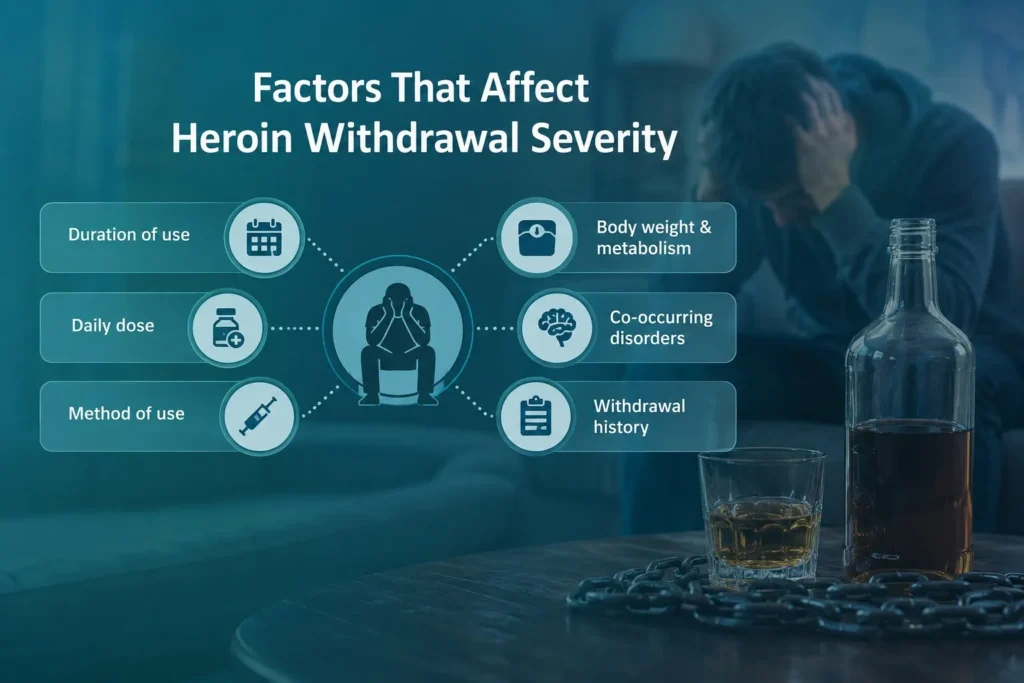
Individual factors can also affect how severe withdrawals are, such as:
The length of time someone has been using heroin
- Average daily heroin dose
- The method used to take the drug
- Body weight and metabolism
- Co-occurring disorder
- History of withdrawal episodes
Our Maryland Trusted Heroin Detox Support Is One Call Away
Let MD Rehab Center guide your recovery journey.
Heroin Withdrawal Symptoms: What Your Body Goes Through
These symptoms of heroin withdrawal are not just ‘feeling bad.’ They have widespread effects on bodily systems while also producing extreme mental distress. Here is a complete breakdown.
Physical Symptoms of Heroin Withdrawal
- Severe muscle pain, spasms, and joint aches
- Nausea, vomiting, and extreme diarrhea (resulting in life-threatening dehydration)
- Heavy sweating and goosebumps (known as ‘going cold turkey’)
- Nasal discharge, tear production, and yawns
- Tachycardia, high blood pressure
- Insomnia
Psychological Symptoms of Heroin Withdrawal
- Intense, overwhelming drug cravings
- Severe anxiety and panic
- Depression and emotional flatness (anhedonia)
- Agitation and irritability
- Difficulty concentrating or thinking clearly
- Suicidal thoughts
Heroin Withdrawal Timeline
The most frequently asked question is: “How long does heroin withdrawal last?” The answer is individual to the patient, but whatever path they go down, there is one described clinical pattern that most patients will follow. The following table details each phase, with estimated timelines and signs.
| Timeframe | Phase | Symptoms & Notes |
| 6–12 hrs | Early Stage | Anxiety, muscle aches, runny nose, insomnia |
| 24–48 hrs | Acute / Peak | Nausea, vomiting, diarrhea, profuse sweating, severe muscle cramps, rapid heart rate, elevated blood pressure, intense cravings |
| 48–72 hrs | Peak Intensity | dehydration risk, insomnia, agitation |
| 4–7 days | Subsiding | Physical symptoms begin to ease. Fatigue, depression, anxiety, and strong psychological cravings continue |
| 1–4 weeks | Post-Acute (PAWS) | Sleep disruption, mood instability, concentration difficulty, persistent cravings |
| 1–6+ months | PAWS (Ongoing) | Intermittent cravings, anxiety episodes, dysphoria. |
This is why detox alone is not a treatment. Detox manages the acute phase. Comprehensive addiction treatment at MD Rehab addresses everything that comes after.
Is Heroin Withdrawal Dangerous? Can You Detox at Home?
In a generally healthy population, overdosing and heroin withdrawal are rarely fatal. But the risk of exacerbated dehydration, cardiovascular strain, psychological collapse, and relapse that follows an unregulated detox effort makes home-weaning among the most reckless choices for any heroin addict.
Why Home Detox from Heroin Is Dangerous
- This may lead to kidney failure and life-threatening electrolyte imbalances
- The spikes of blood pressure or heart rate
- Suicidal ideation during a psychophysiological breakdown
- Any abstinence period greater than 48–72 hours is very likely to be followed by a relapse
- A loss of tolerance, inducing relapse on the same pre-withdrawal heroin dose, is a major cause of overdose deaths.
| Clinical Fact: According to NIDA research, concludes that more than 90% of persons who attempt unsupervised heroin detoxes relapse within days of cessation. The high risk of overdose on relapse, when the person has lost their tolerance, is life-threatening. |
When it comes to detoxing from heroin, the solution is NOT willpower; it requires medical assistance if you or a loved one thinks about going through this. The medically-supervised detox program at MD Rehab gives you the clinical atmosphere needed to make withdrawal survivable and manageable, setting you up for an effective recovery.
Medication-Assisted Treatment (MAT) for Heroin Withdrawal
Medication-Assisted Treatment (MAT) is the standard care and an FDA-approved treatment for those with opioid use disorder. MAT incorporates proven medications to alleviate withdrawal, eliminate cravings and restore chemical balance in the brain, significantly increasing both safety and long-term recovery success.
Buprenorphine / Suboxone for Heroin Withdrawal
The most popular and clinically established treatment for heroin withdrawal is buprenorphine (which is available in combination with naloxone, as Suboxone). It is a partial opioid agonist; it stimulates opioid receptors sufficiently to prevent withdrawal and cravings, without eliciting the high or sedation of heroin.
Key benefits of Suboxone for heroin withdrawal include:
- Significantly decreases the severity of acute withdrawal signs and symptoms within 30–60 minutes after the first dose
- Minimizes cravings in the early stages of recovery
- Long half-life (24–72 hours) facilitates once-daily dosing, minimizing risk for misuse
- FDA-approved for short-term detox and long-term maintenance use
- This can be followed by ongoing treatment of IOP and PHP phases to prevent relapse
Methadone and Clonidine: Other MAT Options
Methadone is a full opioid agonist used in federally regulated Opioid Treatment Programs (OTPs). Methadone is an agonist, federally regulated for use in Opioid Treatment Programs (OTPs); used for chronic pain. While it is great for craving and withdrawal relief, it requires daily visits to a clinic and heavy federal regulation. Clonidine, a non-opioid hypertension medication frequently used off-label for managing autonomic withdrawal symptoms, which include sweating, anxiety, agitation and elevated heart rate, does not target cravings directly.
What MD Rehab Center Provides: Full Heroin Detox & Recovery Programs
Detox is not the finish line; it is just a starting point. MD Rehab Center offers a full spectrum of services from the early hours of medically supervised detox to extended-care programs oriented around long-term relapse prevention tailored to each severity level needed for opioid use disorder.
| Program | Format | What It Includes |
| Medical Detox | 24/7 inpatient | Vitals monitoring, FDA-approved MAT, withdrawal medication management, crisis intervention |
| PHP | 5–6 days/week | Structured therapy, counseling, MAT continuation, dual diagnosis treatment |
| IOP | 3–5 days/week | Flexible outpatient therapy and relapse prevention training |
| Dual Diagnosis | Integrated | Mental health disorders treated alongside addiction |
| Aftercare / Alumni | Ongoing | Relapse prevention planning and community support |
Medically Supervised Detox at MD Rehab
MD Rehab operates a detox by staffed and supervised 24/7 with licensed medical physicians specifically trained in addiction medicine. The vital signs, emotional state, and progress of each patient’s withdrawal are monitored continuously.
Partial Hospitalization Program (PHP) for Opioid Addiction
After medical detox, the majority of our patients step down into our Partial Hospitalization Program (PHP). PHP offers 5–6 days a week of structured, intensive care with group therapy, and individual counseling, MAT continuation, psychiatric evaluation & life skills, goes home or to sober living every night.
Intensive Outpatient Program (IOP) for Heroin Recovery
MD Rehab’s Intensive Outpatient Program (IOP) offers structured therapy and counseling for 3–5 days per week, allowing patients to hold onto work, family & other life commitments while receiving professional addiction treatment. IOP is for patients who have completed detox and PHP, or if the clinical assessment has determined that they can be safely stepped down to this treatment.
Dual Diagnosis: Treating Addiction and Mental Health Together
Most people addicted to heroin also suffer from co-occurring psychiatric disorders, the most common being depression, anxiety, trauma (PTSD) and bipolar disorder. MD Rehab incorporates dual diagnosis treatment from the ground up, making it a fundamental part of every level of care instead of simply an add-on.
One of the main reasons, however, people relapse is that addiction was treated without treating the co-occurring mental conditions contributing to it. The clinical team at MD Rehab comprises licensed therapists, psychiatrists, and addiction medicine specialists who treat the entire person not just the substance use.
Begin Your Healing Journey at MD Rehab Center in Maryland
Professional care makes recovery possible.
How to Get Help at MD Rehab Center
When you need help, it all starts with just one call. You don’t have to have it all planned out. You do not have to be ready enough. You just need to reach out.
This is what happens when you reach out to MD Rehab:
- Get started with a free, confidential call
- Insurance verification
- Clinical Assessment
How long does heroin withdrawal last?
The acute phase of heroin withdrawal usually starts 6–12 hours after last use, peaks between 24–72 hours (acute stage), and is physically resolved within 5–7 days.
Is heroin withdrawal life-threatening?
Unsupervised detox is truly dangerous due to severe dehydration from vomiting and hypertensive crisis, including suicidal thoughts.
What medications are used in heroin withdrawal treatment?
The FDA approved medications include buprenorphine (Suboxone), methadone, and naltrexone for craving and withdrawal control.
Can I detox from heroin at home safely?
Unsupervised heroin detox at home carries serious risks and is not recommended. Around 90% of people who attempt to detox from opiates at home will relapse.
How do I find a treatment center for heroin withdrawal?
You can easily find a suitable rehab facility near you by searching for a licensed rehab name or checking insurance-approved providers.