There’s no need to become a “perfect” version of yourself within a short time. What you need are attainable, small recovery goals that help you build momentum, regain confidence, and create an environment you can live in.
These 10 recovery goals are rooted in our advanced treatment what helps people stay sober for long periods. They’re built on years of recovery experiences, research, stories, and experiences from thousands of people who have participated in programs such as AA, NA, SMART Recovery Therapy, and SMART Recovery. They’re designed to be achievable, even on a rough day.
The Importance of Setting Realistic Goals in Early Recovery
Recovering from an addiction among the most demanding, yet rewarding experiences that a person could undertake. In the beginning, those crucial initial weeks and months, everything can be a bit unsettling and apprehensive. The moods change, cravings pop up at any time, and your next may seem both hopeful and frightening.
This is why realistic goal setting in recovery is very effective. They provide direction in times of chaos. They help turn the abstract concept of “getting better” into concrete, manageable steps. Furthermore, achievable recovery goals boost confidence, generate positive momentum, and remind us that improvement is possible, even on the toughest days.
As per the Substance Abuse and Mental Health Services Administration (SAMHSA), making a recovery plan that is personalized with achievable goals is one of the key aspects of long-term, effective treatment. Setting realistic goals can help reduce feelings of failure, avoid burnout, and keep you focused on your progress rather than perfectionism.
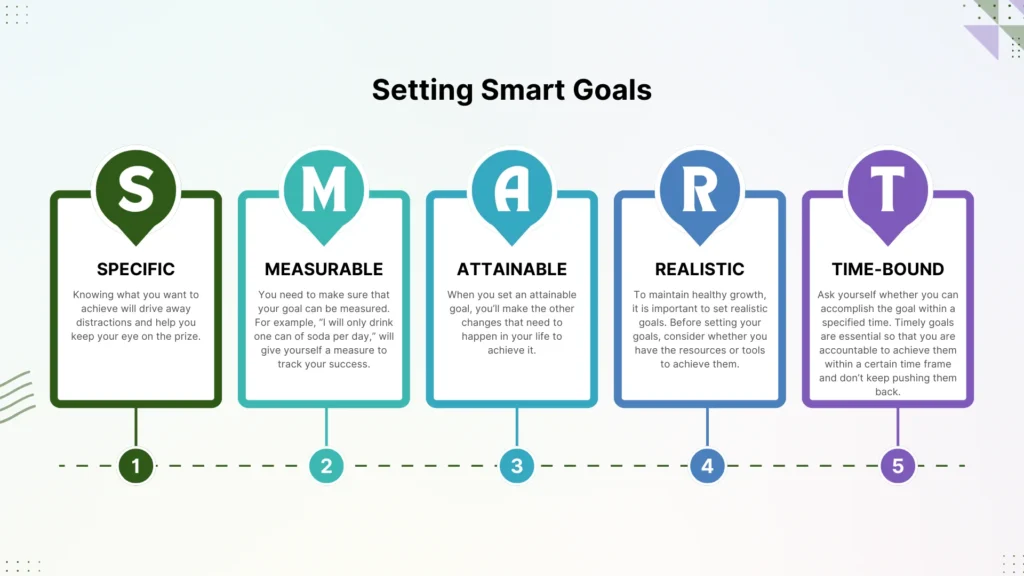
How to Set Effective Goals in Recovery
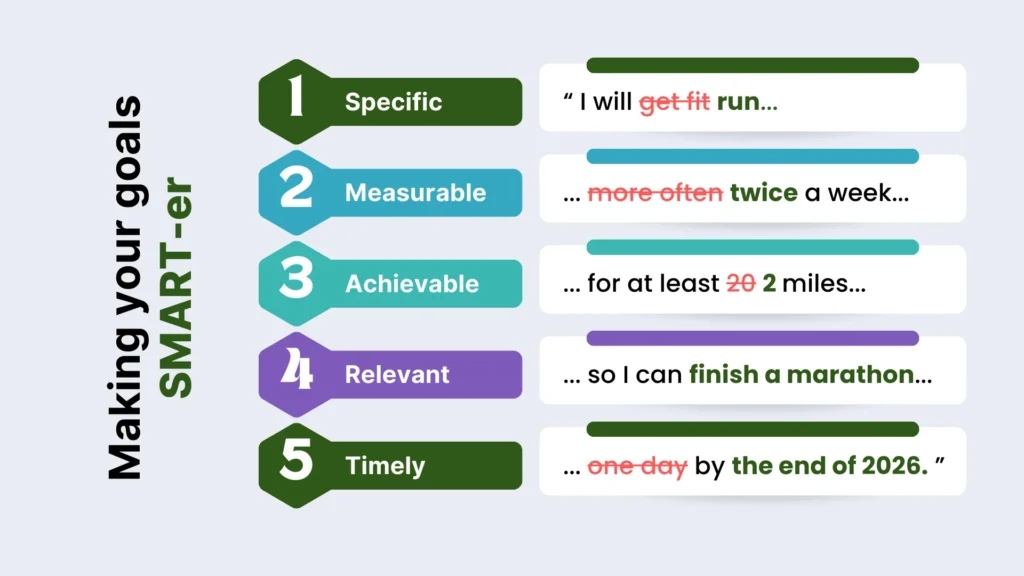
The most effective SMART goals in recovery are based on the SMART criteria, which is a framework frequently recommended by counsellors, therapists or recovery programmes:
- Specific: Define the goals you’d like to reach. For instance, instead of “get healthier,” say “walk for 20 minutes five days a week.”
- Measurable: Provide a method for monitoring progress. Ask yourself, “How do I know when I’ve accomplished this?”
- Realistic: Know the things that are realistic at this moment. The early recovery phase is fragile, and overly ambitious goals could lead to despair.
- Relevance: The objective should be to help you maintain your health and sobriety.
- Time-bound: Establish a specific timeframe. “This week” or “over the next 30 days” gives a sense of tension.
10 Realistic Goals to Set in Early Recovery (And Why They Actually Work)
These goals have been specifically designed for the initial phase of life-long recovery. These first steps toward recovery emphasize stabilization, self-care, and establishing healthy habits without taking too much time. Choose a few to start, but progress increases over time.
1. Commit to Sobriety Every Day
The idea of staying forever seems impossible when you’re just getting started. Instead, you should make a vow to yourself to remain completely clean for 24 hours.
The focus on a particular day takes away the burden of “never again” and turns sobriety into small, winnable fights. In time, those small victories become months, weeks and even years.
How do you make it work:
Every day, you can make a statement or write it down: “Just for today, I will not drink or use.” If the urge to drink or use arises, remind yourself that your commitment will only last until your bedtime. You can renew it next time.
2. Show Up to at Least One Support Meeting a Week
It doesn’t matter if it’s AA, NA, or whether it’s SMART Recovery, Refuge Recovery, or an online group; regular contact with other people in recovery can be a game changer.
It’s not necessary to attend 90 meetings within 90 days from the beginning. Begin with a single meeting per week will help you build the habit but doesn’t overwhelm you. It also reminds you that you’re not the only one.
How do you make it work:
Select a date you’d like to attend (in-person or via virtual) make sure you block the time in your calendar, then make it an unassailable appointment. Even a quiet conversation counts as attending.
3. Find One Person You Can Call When Things Get Hard
A therapist, a sponsor, or recovery coach sober friend — just one person to contact in the event of an emergency. Isolation is among the main triggers of relapse. Even one lifeline breaks this cycle and provides immediate support during emotional turmoil.
How do you make it work:
Find a trusted person to talk to during an interview or application. Start small, send a check-in message every week. From there, you can build purpose recovery.
4. Create a Simple Daily Routine
Get up, eat or move around, and go to bed around the same time every day. The structure is your new greatest friend. A simple, regular routine reduces the time you spend idle, improves your mood, and provides your day-to-day routines with predictable anchors.
How do you make it work:
Create a loose plan such as wake up at 9 am, 3 meals, a bit of activity, and lights out by midnight. Modify as necessary however, try to stick to it for 5-6 days per week.
Ready to Take the Next Step in Your Recovery Journey?
Don’t be waiting for that “perfect” moment choose one realistic goal from this list now, take action right now, and get started on creating the healthier and more satisfying life you desire
5. Eat Three Meals a Day (Even If They’re Basic)
Addiction can disrupt eating habits, making your brain and body starved of a steady supply of fuel.
Regular meals help stabilize blood sugar levels, ease irritation, and aid your brain’s recovery. There is no need for gourmet cooking, just constant nutrition.
How do you make it work:
Choose healthy and easy choices such as oatmeal, egg sandwiches, peanut butter canning tuna, frozen veggies and fruit. Consume something every 4 to 5 hours, regardless of whether your appetite is low.
6. Move Your Body for 20 Minutes Daily
A simple stroll, a little stretching or dancing around the room–any kind of gentle move counts. The exercise routine releases endorphins and dopamine, which help improve mood, decrease anxiety, and reduce cravings. Studies have shown that regular exercise can reduce the risk of relapse by enhancing the management of stress and overall wellbeing.
How do you make it work:
Pick something simple, walk across the street, watch an easy YouTube stretching video, or play music and move around freely. Set it to the same time every day or, on days with low energy, reduce the time to 10 minutes.
7. Practice a 5-Minute Mindfulness or Breathing Exercise Daily
Anxiety, cravings or racing thoughts can all be common in the early stages of recovery. A brief pause in your day will help you work through them rather than react. It is not necessary to lie on your back to sit for any length of time. Five minutes can help you master the art of observing cravings, but not engaging in them, which is a fundamental preventative tool against relapses.
How do I make it work:
Utilize a free application (Insight Timer Calm, Headspace, Insight Timer trials) or just do box breathing: inhale for 4 seconds, hold 4, and exhale 4. Do this first thing in the morning, or whenever tension hits.
8. Avoid Your Biggest Triggers for Now
Certain places, people, or bars remain in the grip of too much influence early on. Allow yourself to stay clear of. Early recovery is about security, not about showing the strength of your will. The removal of temptation gives your brain enough time to repair itself and grow more effective coping abilities.
How do you make it work:
Write down your top three triggers. Find alternative routes, tell “no” to risky invitations and prepare an exit plan in case of unexpected encounters.
9. Start Seeing a Counselor or Therapist Regularly
Assistance from a professional isn’t just a luxury; it’s an essential component of many who have long-term health issues. Therapists help uncover and address the root issues that led to addiction. Even monthly sessions can be beneficial. For behavioral health providers, managing therapy, documentation, insurance requirements, and behavioral health billing services is also an important part of delivering organized and continuous care.
How do you make it work:
Ask your doctor, recovery program, or search for sliding-scale/low-cost options. Be sure to attend all scheduled sessions without canceling.
10. Celebrate Every Milestone–No Matter How Small
One week clean. A month later, you’ve accomplished the goal, and acknowledge it. Positive reinforcement of progress and keeps motivation fresh.
How do you make it work:
You can reward yourself with something worthwhile and non-smoking: a special dinner, a new book film night or even a token of recovery.
Conclusion
The process of early recovery isn’t about becoming a totally new person in a matter of hours. It’s about taking gradual, steady steps toward living a life that is stable, real, meaningful, and yours.
Certain days are more comfortable than others. You’ll experience setbacks and breakthroughs as well as moments of clarity and moments of doubt, and it’s an integral part of life. The most important thing is that you continue to show yourself as you are, even when you’re failing. Every meeting you attend, each walk you take, each “just for today” is a small victory that stacks up against you.
You’re already doing your hardest job just by simply being here and trying. Be patient, gentle and continue to work. The most rewarding chapters of your story are in the MD rehab Center.
Start Building Your Stronger Tomorrow Right Here, Right Now
Your commitment to sobriety is worthwhile, your future is waiting, and you’re capable of much more than you realize. What goal do you claim as yours today? Get started today. You’ve got this!
What are some good goals in recovery?
Good goals in recovery are to stay sober every day and reestablish relationships that improve mental and physical health.
What are 10 short-term goals examples?
10 short-term goals examples of recovery is to attend 90 meetings within 90 days, do daily journaling, workout three times a week, create a sober morning routine, connect with a family member, take 10 minutes to practice mindfulness daily and avoid triggers that are old, sleep for 7-8 hours sleep each night, make an agenda for meals each week and then celebrate the 30 days of sobriety.
What are the 10 elements of recovery?
The 10 elements of recovery include empowerment, hope, self-responsibility, education, support, coping techniques, wellness, participation in the community, spirituality, and a sense of purpose in daily life.
What are the 7 Rs of recovery?
The 7 Rs of recovery are Recognition, Regret, Remorse, repair, Rebuilding, Preventing relapse and Renewal.
What are the 12 pillars of recovery?
The 12 pillars of recovery include honesty, faith, hope, courage, integrity, willingness, humility, determination, discipline, spiritual awareness, and compassion or love.