An intensive outpatient program (IOP) is a structured, clinically supervised addiction treatment that provides 9–15 hours of weekly therapy while you continue living at home. It’s classified by SAMHSA as a first-line treatment for substance use and co-occurring mental health disorders.
Here at MD Rehab, we understand that recovery is different for each individual. This blog will help you choose your treatment schedule and explain how outpatient rehab works.
What Is an Intensive Outpatient Program (IOP)?
An Intensive Outpatient Program (IOP) is an organized, clinically-supervised treatment for mental or addiction issues that allows patients to attend sessions of therapy that last between 9 and 15 hours a week, but without residing in the treatment center.
IOP is formally classified as ASAM Level 2.1. IOP allows you to receive structured treatment without residing in a facility — you return home or to a sober living environment after each session. IOP permits you to go home or to a sober living space after every session. This allows you to work, attend school, and juggle the obligations of your family while receiving intense treatment.
| Research findings: According to the NIDA (National Institute on Drug Abuse), IOP is equally efficient as inpatient rehab for those with moderately severe addiction with a stable, comfortable home environment. |
What Happens During IOP Sessions?
IOP sessions’ treatment approaches are structured and organized based on evidence-based research. The typical session lasts 3 hours. It may also consist of a mixture of these therapies to treat addiction with dual diagnosis treatment:
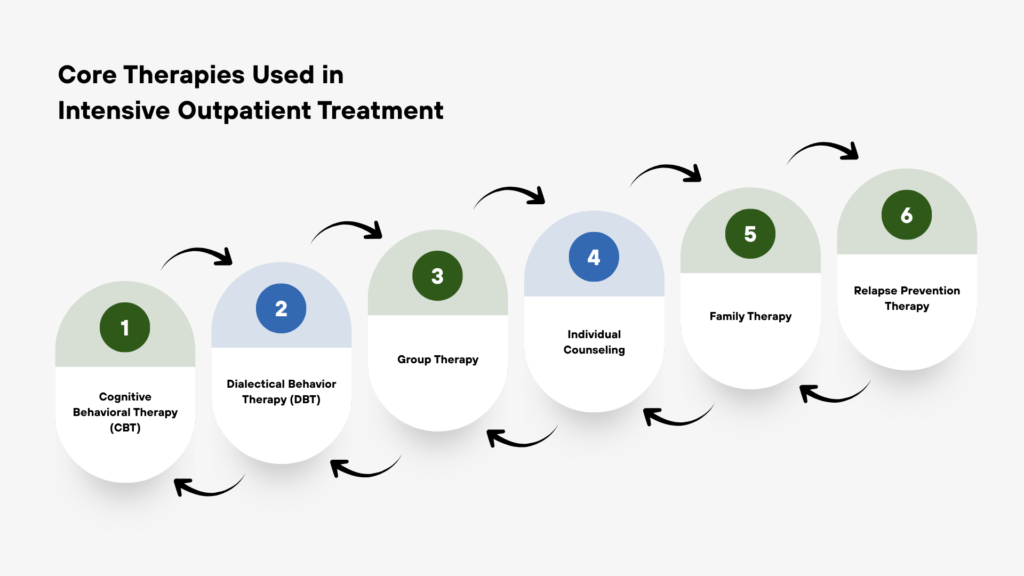
- Cognitive Behavioral Therapy (CBT) involves the process of identifying and changing addictive thinking patterns
- Dialectical Behavior Therapy (DBT) involves regulating emotions and developing tolerance to distress
- Motivational interviewing (MI) is a method of generating an internal drive to sustain recovery
- Sessions for group therapy include peer support, the sharing of stories, and accountability
- Individual one-on-one counseling with a customized treatment plan and review of progress
- Sessions for family therapy are about reestablishing relationships and building the support system
- Relapse prevention education involves finding triggers and developing strategies to cope
- Psychoeducation, understanding addiction as a condition, and the science behind recovery
- Medically-Assisted Treatment (MAT) coordination whenever clinically appropriate
Find Structured IOP Treatment Near You at MD Rehab
During your intake assessment at MD Rehab, our clinical team will recommend the level of care that gives you the highest chance of lasting recovery.
IOP vs PHP vs Inpatient Rehab: What’s the Difference?
The most frequent queries people are asked are how an IOP compares to other treatment options. Addiction treatment is based on what’s known as “levels of care,” or “continuum of care,” as defined in the ASAM (American Society for Addiction Medicine). Understanding a professional rehab place where IOP is a good fit will help you make an informed choice.
Understanding the Levels of Care in Addiction Treatment
| Level of Care | Hours / Week | Living Arrangement | Best For |
| Medical Detox | 24/7 supervision | Residential (facility) | Severe withdrawal, medically unsafe detox |
| Inpatient / Residential | 24/7 programming | Residential (facility) | Severe addiction, unstable home, high relapse risk |
| Partial Hospitalization (PHP) | 20–30 hours | Home or sober living | Post-inpatient transition, high support needs |
| Intensive Outpatient (IOP) | 9–15 hours | Home or sober living | Moderate addiction, stable environment, work/family obligations |
| Standard Outpatient | 1–9 hours | Home | Mild addiction, strong social support, aftercare maintenance |
| Aftercare / Alumni | Ongoing | Home | Long-term sobriety maintenance post-treatment |
Why Some People Choose IOP Over Inpatient Rehab
IOP is extremely effective. However, it’s not the ideal choice for every person. People choose IOP as it allows individuals to:
- Keep working or operating your business with no absence
- Child care and other dependents in the home
- Save yourself the cost of the full treatment for residential homes
- Maintain their bond with the support network community, including family, sponsors, and the local community
- Learn recovery techniques or real-life coping strategies
However, this doesn’t necessarily mean that IOP will be an “easier” option, as it is a commitment that requires a lot of discipline and secure living surroundings. This means that it’s suitable for the right person.
How Many Hours a Week Is an Intensive Outpatient Program?
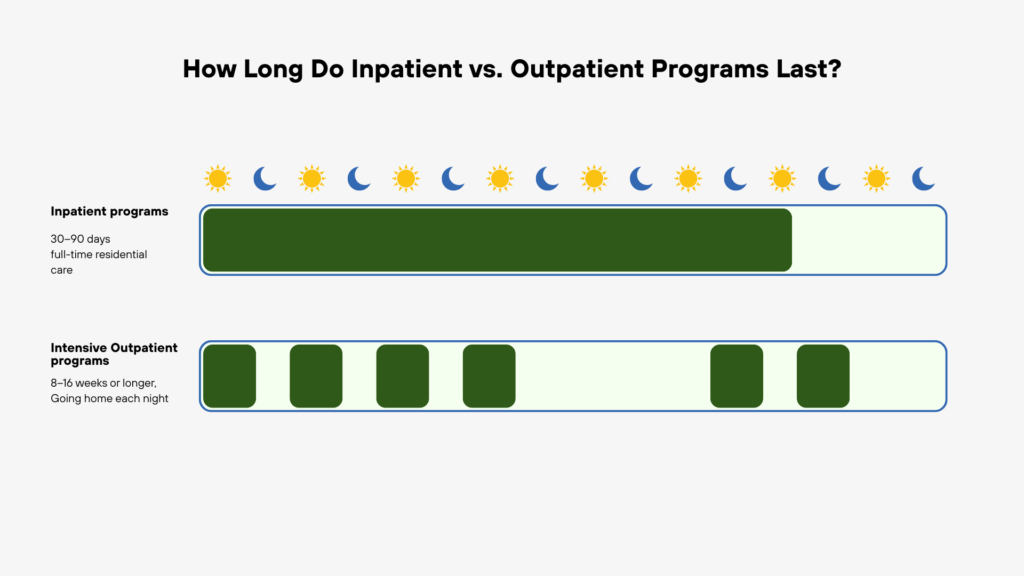
The majority of IOPs need 9 to 15 hours of therapy each week. This is usually divided over 3 to 5 days. The average session is around 3 hours long. The schedule is dependent on the individual needs; however, the majority of IOP sessions occur in the morning and evening to fit families and their work schedules.
Here at MD Rehab, our clinical team will work in conjunction with you to help the recovery process and your lifestyle.
A Typical IOP Weekly Schedule at MD Rehab
| Day | Session Time | Duration | Session Type |
| Monday | 6:00 PM – 9:00 PM | 3 hours | Group therapy + Psychoeducation |
| Wednesday | 6:00 PM – 9:00 PM | 3 hours | CBT group + Individual counseling |
| Friday | 6:00 PM – 9:00 PM | 3 hours | DBT skills + Relapse prevention |
| Optional: Tuesday | Morning session available | 3 hours | Family therapy / MAT coordination |
| Duration: The majority of IOP programs run between 8 to 12 weeks. However, this depends on each individual’s recovery progress and addiction severity. A few patients with co-occurring disorders might benefit from an extended IOP involvement of as long as 16 weeks. |
Who Is an Intensive Outpatient Program Right For?
IOP cannot be a universal standard strategy. It’s best suited to the specific needs of an individual. By using the ASAM criteria, which is the best way to determine the right degree of care, the clinicians evaluate six dimensions before making recommendations for IOP:
- Acute intoxication and withdrawal potential
- Medical conditions that affect the body and their complications
- Behavior, emotional, or cognitive issues
- Ready to embrace change
- Relapse, continual use, or the possibility of a continuing problem
- Living and recovery
Signs You May Be a Good Candidate for IOP
Doing an IOP assessment to see if you are a great candidate for an intensive outpatient program, if:
- Medical detox has been completed, and you are medically stable
- You are in a secure, healthy, clean and supportive environment to live in at your home
- Your addiction is not severe in its severity, but it is not severe enough to warrant 24/7 medical supervision.
- You’re motivated and are ready to be active in the treatment process
- There is school, work, or a family obligation that it is impossible to neglect
- Step-down supportive help is required following the completion of PHP or inpatient treatment
- A co-occurring mental health problem like depression, anxiety, or PTSD
- Have a reliable transport program to ensure you attend regularly
When IOP May Not Be Enough — Signs You Need a Higher Level of Care
The right degree of treatment is the most crucial decision you make in your treatment. IOP is not suitable for all patients, so at MD Rehab, we would prefer to guide you towards the best program instead of enrolling you in a program that will not fit your requirements.
You may require a more advanced degree of treatment as a step-down care, such as the Partial Hospitalization Program (PHP) or Inpatient Rehab, if:
- If you are experiencing withdrawal symptoms and require medical attention
- The environment in which you live is dangerous and unstable, or triggering you to take substance abuse
- There is a record of multiple relapses and failed low-level treatments
- Your life is at risk, injury to yourself or other people
- If you suffer from a co-occurring severe psychosis that needs urgent stabilization
- You lack the transportation, motivation, or support system to attend IOP consistently
What Conditions Does IOP Treat?
MD Rehab’s outpatient program is designed to treat a broad range of substance use disorders and co-occurring mental health conditions, including:
| Condition | Treatment Approach in IOP |
| Alcohol Use Disorder (AUD) | CBT, motivational interviewing, MAT (naltrexone/acamprosate), relapse prevention |
| Opioid Use Disorder (OUD) | MAT (buprenorphine/Suboxone), CBT, trauma-informed care, harm reduction |
| Cocaine / Stimulant Addiction | Behavioral therapies, contingency management, peer support groups |
| Cannabis Use Disorder | CBT, motivational enhancement therapy, coping skills training |
| Benzodiazepine Dependence | Post-detox stabilization, anxiety management, trauma processing |
| Co-Occurring Anxiety / Depression | Dual-diagnosis treatment, DBT, medication management coordination |
| Co-Occurring PTSD | Trauma-informed CBT, EMDR coordination, safety planning |
| Dual Diagnosis (any) | Integrated mental health + addiction treatment within the same program |
Does Insurance Cover Intensive Outpatient Programs?
Yes, IOP is provided by insurance. Treatment providers can also benefit from behavioral health billing support to manage insurance claims, documentation, and reimbursement for behavioral health services. As per the Affordable Care Act (ACA) and the Mental Health Parity and Addiction Equity Act (MHPAEA), the majority of insurers, including private ones like Medicaid and Medicare, legally have to pay for addiction treatment, including IOP on the same amount like other medical conditions.
Take the First Step Toward Lasting Sobriety With Flexible IOP Treatment That Fits Your Work and Family Schedule
Call MD Rehab’s admissions staff now to confirm your benefits from insurance.
Frequently Asked Questions About Intensive Outpatient Programs
Q: What is an intensive outpatient program (IOP)?
A: IOP is a well-structured and organized program where patient can attend therapy sessions for 9 to 15 hours per week while going back to their work or homes.
Q: What is the success rate of virtual IOP?
A: Virtual Intensive Outpatient Programs (IOP) show comparable less success rates to in-person care, with great low or no improvement in sobriety and mental health.
Q: What is the difference between IOP and PHP?
A: A Partial Hospitalization Program (PHP) requires 20 – 30 hours of treatment per week and is typically for individuals who have recently completed inpatient treatment. IOP is appropriate for those with a stable home environment who need significant support but not full-day programming.
Q: How long does an intensive outpatient program last?
A: IOP typically lasts 8 to 12 weeks, depending on individual progress and clinical needs.
Q: Can I work while attending an IOP program?
A: Yes. IOP gives you the flexibility to work, attend school, and family responsibilities.
Q: What happens after you complete an IOP?
A: After IOP completion, the patients transition into an aftercare plan (the standard outpatient treatment, 1-2 sessions every week). Planning for aftercare is a key part of every IOP in MD Rehab.
Is IOP the Right Step for You?
An outpatient treatment program isn’t a less effective option for treatment. In fact, this is the most reliable, durable way to recover. It provides clinical care along with a peer-based community and a proven therapy that lets people remain involved in life.
Make the first move today by calling us at MD Rehab.