Most people who enter rehab carry more than one burden. Behind the alcohol use is untreated anxiety. Behind the opioid dependence are years of unprocessed trauma. The intersection of mental illness and addiction is not the exception. It is the norm.
If you or someone you love has been through treatment before and relapsed. We’ll walk through exactly what our MD rehab dual diagnosis treatment is, how it works, what therapies are involved, and how to choose the right dual diagnosis treatment center.
| FEATURED SNIPPET DEFINITION Dual diagnosis treatment is an integrated clinical approach to treat both a substance use disorder and a co-occurring mental health condition (e.g., depression, anxiety, PTSD, or bipolar disorder) at the same time. |
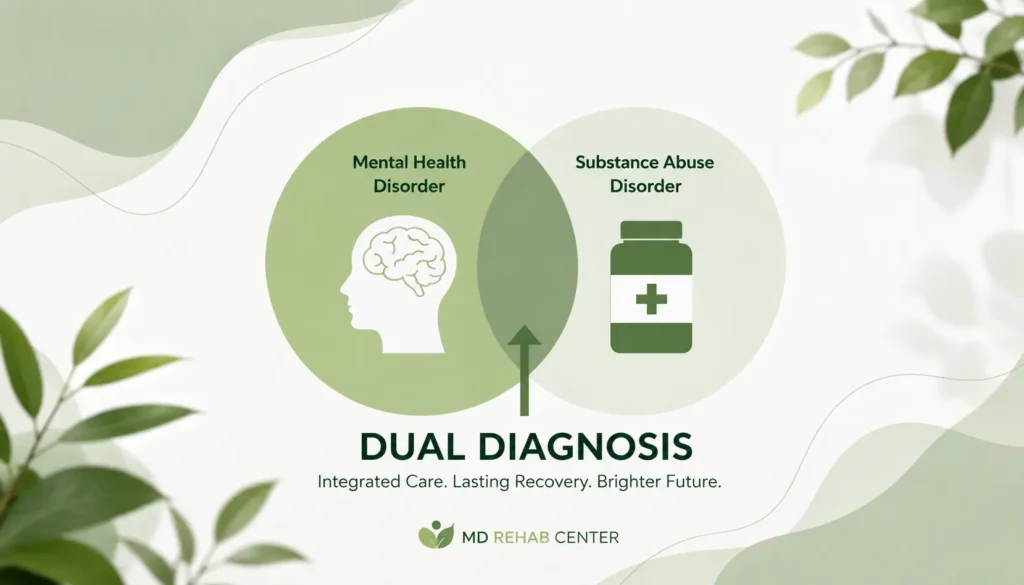
What Is Dual Diagnosis Treatment?
This treatment approach targets a substance use disorder and one or more co-occurring mental health conditions.
The phrase “dual diagnosis” came into clinical practice as treatment providers began to realize that many individuals in addiction treatment had underlying psychiatric diagnoses. These psychological symptoms are being ignored, which can turn into relapse and failure to complete substance use disorder treatment.
What Makes It “Dual Diagnosis”?
The “dual” identifies two overlapping relationships between substance use and mental health, diagnostic disorders:
- A substance use disorder, such as alcohol use disorder or opioid use disorder, stimulant use disorder, or any other clinically significant pattern of substance misuse
- A mental health condition such as depression, generalized anxiety disorder, DPSD, bipolar disorder, schizophrenia, and ADHD
| According to SAMHSA’s National Survey on Drug Use and Health, more than 21 million American adults suffer from substance use disorder and mental health disorders simultaneously (SUBSTANCES AND MENTAL HEALTH). |
Break Free from the Cycle of Addiction and Mental Health Struggles
Through our dual diagnosis program, you will get individualized treatment that can help you take back your life and create a better tomorrow.
What Are Co-Occurring Disorders?
Co-occurring disorders, also known as comorbid disorders or dual diagnosis refers to the co-existence of a mental health disorder and substance use disorder in the same person.
Both terms (dual diagnosis and co-occurring disorders) are used interchangeably.
How Common Are Co-Occurring Disorders?
The data is striking:
Approximately 50% of people with a severe mental illness also develop a substance use disorder at some point in their lives, according to NIDA.
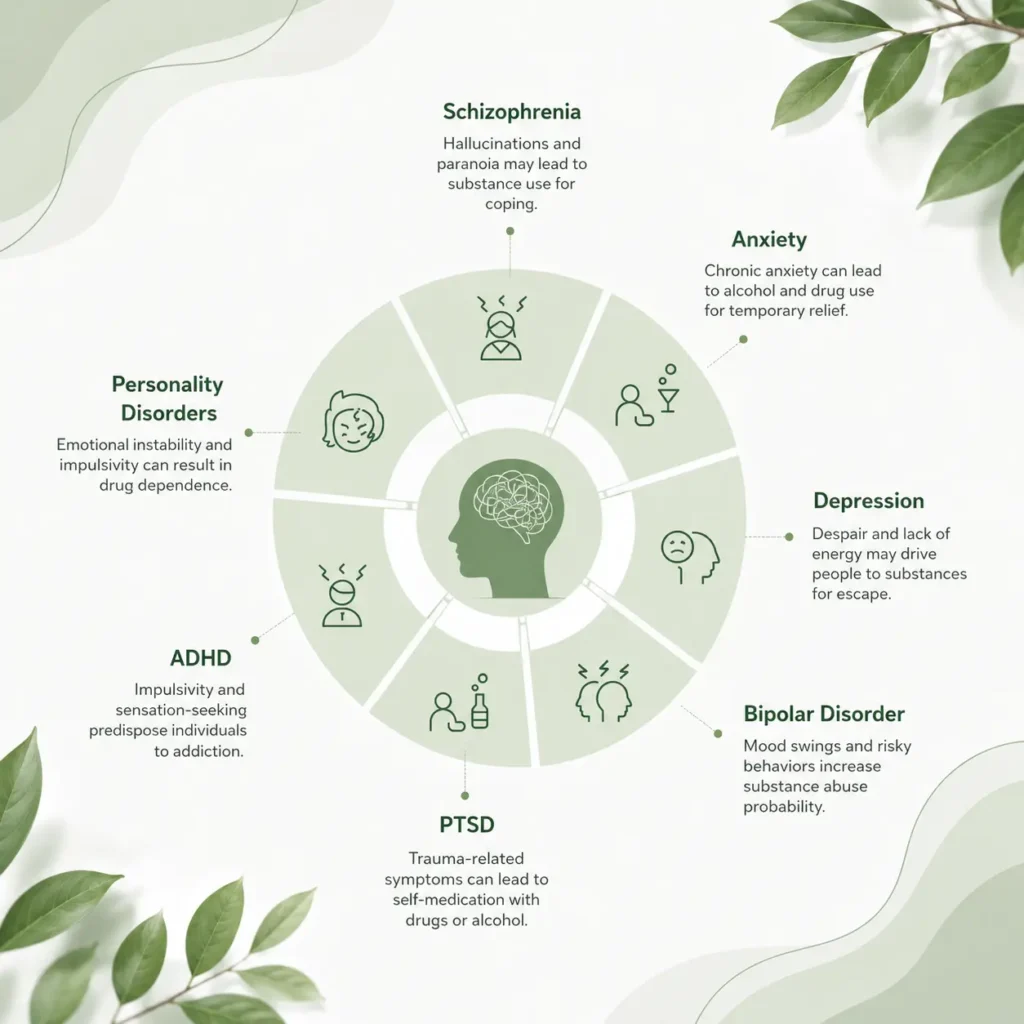
Common Mental Health Conditions Linked With Addiction
Not every mental health condition overlaps with addiction at the same frequency. Others are closely associated with substance use disorders. By recognizing these patterns, clinicians are able to provide better diagnoses and ultimately more effective treatment plans.
Depression and Substance Use Disorder
Depression is one of the most frequent comorbidities among addiction treatment populations. Major depressive disorder nearly doubles the risk of disorders involving substances.
Alcohol is a known depressant of the central nervous system, so it has a strong association with state and/or chronic depression, while it may temporarily decrease inhibition or dull other emotional pain.
Anxiety Disorders and Addiction
Generalized anxiety disorder, panic disorder and social anxiety disorder have a strong co-occurrence with alcohol, benzodiazepine and cannabis use disorders.
Poorly managed anxiety leads in particular to benzodiazepine dependence, given the high potential for addiction when these medications are used outside controlled prescribing environments.
PTSD and Substance Abuse
Post-traumatic stress disorder and addiction are one of the most clinically significant co-occurring pairings. Studies published in peer-reviewed addiction journals continually report that between 30%-60% of those with PTSD seeking treatment also meet criteria for substance use disorder.
Bipolar Disorder and Drug Use
Research indicates that between 30% and 60% of individuals with bipolar disorder also have a substance use disorder.
Substance use may spike significantly during manic phases. State instabilities in mood due to bipolar disorder are also made significantly worse by substances, which often make isolation very difficult unless the substances are removed.
ADHD and Stimulant or Cannabis Use
Without screening for ADHD in addiction treatment, these cognitive symptoms (impulsivity, reduced working memory and sustained attention) can work as barriers to engaging in therapy, adherence to treatment plans, and sustaining sobriety.
Recovery Begins with the Right Support Within Your Reach
You can have mental health treatment and Substance Use Disorder care with clinically-approved therapies to treat the whole person.
Why Treating Only Addiction May Not Be Enough
Many people spend 30 days in our residential program. They complete detox. They engage in group therapy. They are discharged sober. Within six months, they relapse.
This is not a failing of will or of commitment for many people with co-occurring mental health conditions that are undiagnosed or untreated. It is, as a matter of course, a logical result due to underlying issues.
Here is why:
- The Underlying cause remains the same
- Withdrawal Reveals Psychiatric Symptoms
- Brain Chemistry Needs Stabilization
- The Data Supports Integration
How Dual Diagnosis Rehab Works
A dual diagnosis program is not merely adding therapy to an addiction program. This is a clinically integrated model in which addiction medicine and psychiatric care are delivered in an integrative, collaborative manner.
1- Initial Assessment and Diagnosis
Every dual diagnosis program begins with a comprehensive evaluation. This typically includes:
- Medical assessment
- Psychiatric evaluation
- Psychosocial assessment
- Substance use history
2- Individualized Treatment Planning
Integrating assessment findings, a customized treatment plan designed to simultaneously address both co-occurring disorders with focused and quantifiable goals is developed by the clinical team. It is updated and reviewed frequently throughout treatment.
3- Integrated Delivery
An integrated dual diagnosis care approach would involve having the same clinical team managing both the psychiatric detail and addiction aspect of a treatment plan. Individual therapy, group therapy and skills-based programming are provided by licensed addiction counselors and therapists. Both components operate from a shared understanding of how the two conditions interact.
4- Levels of Care
Dual diagnosis treatment is available at multiple levels of care depending on clinical need:
| Level of Care | Description | Best For |
| Medically Supervised Detox | 24/7 medical monitoring | Acute withdrawal risk, severe dependence |
| Residential (Inpatient) | Live-in treatment, 24-hour care | Unstable psychiatric symptoms, unsafe home environment |
| Partial Hospitalization (PHP) | Day treatment, 5–6 hours/day, 5 days/week | Step-down from residential, moderate-to-high need |
| Intensive Outpatient (IOP) | Structured sessions 3 days/week or more | Stable home environment, moderate need |
| Standard Outpatient | Weekly sessions | Aftercare, maintenance, mild need |
Therapy Options Used in Dual Diagnosis Care
The recent well-researched therapies used for dual diagnosis treatment is where the work happens. Evidence-based therapies are sequenced based on the specific combination of conditions present.
Cognitive Behavioral Therapy (CBT)
CBT is the most commonly used therapy in DSL treatment and has the strongest empirical support across substance use disorders and mental illness. It assists people in identifying and modifying the thought patterns and beliefs that drive them to engage in self-destructive behaviors, including substance use and mental health symptoms.
Dialectical Behavior Therapy (DBT)
DBT was developed for borderline personality disorder but used for co-occurring conditions, especially in the presence of emotional dysregulation, self-harm, and impulsivity. DBT has four key skill sets, including mindfulness, distress tolerance, emotion regulation and interpersonal effectiveness.
EMDR (Eye Movement Desensitization and Reprocessing)
EMDR is a trauma-focused therapy that has solid empirical support for PTSD. When the individual’s use is intertwined with trauma history, EMDR can reprocess apprehensive memories and alleviate the charge that incites self-medicating behavior.
Motivational Interviewing (MI)
Motivational Interviewing MI is a patient-centered, collaborative approach for resolving ambivalence about change. It is particularly valuable in dual diagnosis care where the interaction between psychiatric symptoms and substance use can create a complex web of rationalizations, avoidance, and perceived helplessness around seeking treatment.
Trauma-Informed Care (TIC)
A trauma-informed dual diagnosis incorporates integration of trauma into all levels of practice, so that every environment, interaction and clinical practice is designed to minimize the possibility of re-traumatization, maximize safety and allow clients to process their pasts when prepared to do so.
Group Therapy
Structured group therapy is an integral part of dual diagnosis care. Groups can be specific to a diagnosis (for example, a depression and addiction group or a trauma and recovery group) or organized around skills.
Family Therapy
Addiction and mental illness impact families significantly. Family therapy in a dual diagnosis program not only educates family members on co-occurring disorders, but also teaches the importance of proper communication with their loved one, how to set boundaries and create strategies for healthy interaction.
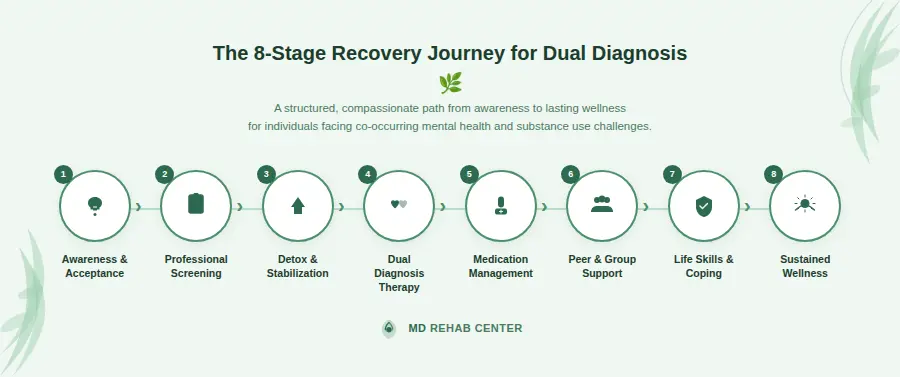
Inpatient vs. Outpatient Dual Diagnosis Treatment
This leads to one of the most frequently asked questions within families… inpatient or outpatient rehab? The answer is dictated by multiple clinical circumstances.
When Inpatient (Residential) Dual Diagnosis Treatment Is Recommended
Residential treatment provides 24/7 care in a structured, supervised environment. It is typically the appropriate level for people who:
- Have a history of severe withdrawal that needs medical treatment
- Have severe psychiatric symptoms rendering outpatient treatment unsafe
- Live in a home or social setting where there is active substance use, high levels of stress, or abuse
- Previously tried outpatient treatment, but it was unsuccessful
- Requires careful, coordinated clinical monitoring of a multifactorial condition
- Do not have a consistent support system or home
When Outpatient Dual Diagnosis Treatment Works Well
Outpatient treatment, including Partial Hospitalization Programs (PHP) and Intensive Outpatient Programs (IOP), can be highly effective when:
- An individual lives in a stable environment that is free of substances.
- There is a solid support system (family or sober peers)
- They are at low risk of withdrawal from medicine or have been detoxed
- Psychiatric symptoms are sufficiently stable that they can be managed with appointments scheduled ahead of time
- Residential treatment isn’t practical due to work-family or other life obligations
See more information: Inpatient vs Outpatient Rehab Which Treatment Option Is Right?
How to Choose a Dual Diagnosis Treatment Center
Not every rehab that talks about the “dual diagnosis” actually provides integrated psychiatric and addiction care. Knowing what to look for protects families from placing their loved one in a program that is not equipped to treat both conditions.
Questions to Ask Any Dual Diagnosis Treatment Center
1. Is there a licensed psychiatrist or psychiatric nurse practitioner on staff?
2. Are psychiatric and addiction services integrated or sequential?
3. What specific mental health conditions do you treat?
4. What therapies are offered for co-occurring disorders?
5. How do you manage psychiatric medications during treatment?
6. What does your aftercare planning look like for dual diagnosis patients?
7. Does insurance cover dual diagnosis treatment?
What MD Rehab Center Offers
The MD Rehab Center offers dual diagnosis care facilities where integrated psychiatric support is provided alongside science-based addiction treatment. Yet, programs are offered at varying levels of care are residential, PHP and IOP, which enable a clinical step-down that aligns with the individual as their needs change throughout recovery.
A confidential intake call with the admissions team can confirm insurance coverage and assist families in determining the right level of care.
Frequently Asked Questions About Dual Diagnosis Treatment
What is the difference between dual diagnosis and co-occurring disorders?
The terms are clinically interchangeable. “Co-occurring disorders” is the preferred term in SAMHSA guidelines, while “dual diagnosis” remains widely used in clinical and public settings.
What is the combination of a substance use disorder with a mental health diagnosis called?
Their combination is called dual diagnosis or co-occurring disorders. It means a person has both a substance use disorder and a mental health condition at the same time.
What is a dual diagnosis, coexisting substance use disorder and psychiatric disorders?
Dual diagnosis means addiction, such as alcohol or drug use disorder, exists together with a psychiatric disorder like depression, anxiety, bipolar disorder, or schizophrenia.
What is the best treatment for dual diagnosis?
The best treatment is usually integrated treatment, where mental health care and substance use treatment happen together.
Ready to speak with a specialist about mental health and addiction treatment?
If you or a loved one struggles with addiction and mental illness, know that you are not alone in your journey of finding a dual diagnosis program. You can call MD Rehab Center’s admissions team to discuss your questions.